











Marion Art Center all wrapped up in new exhibit
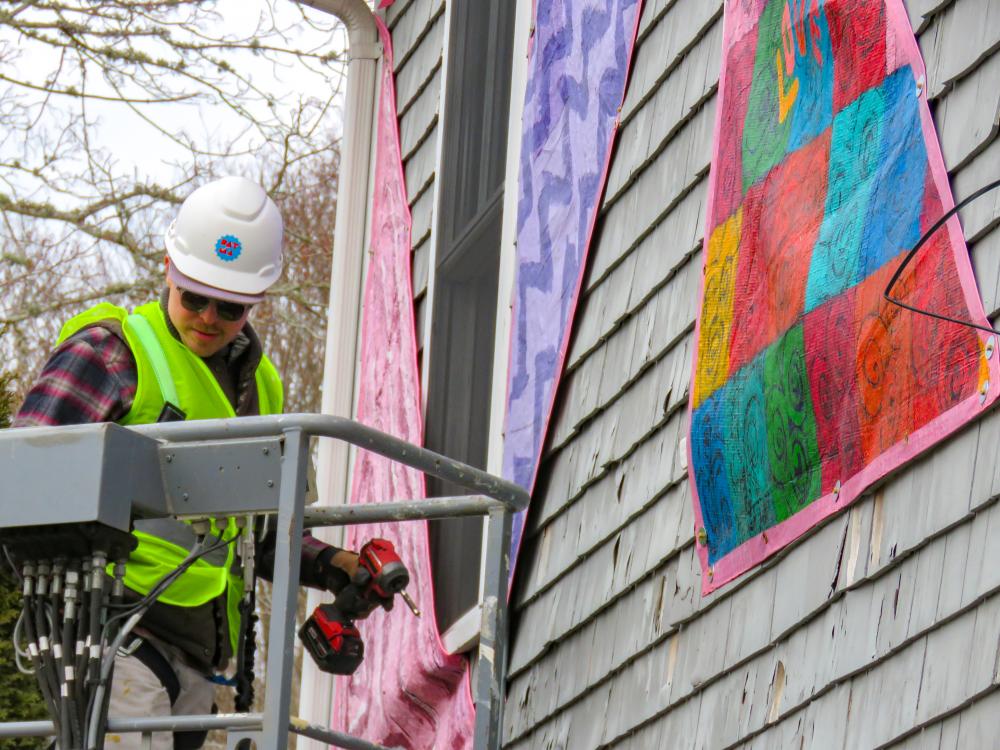 Matt Moyer Bell, Massachusetts Design, Art, and Technology Institute's programs coordinator, installs part of the “Being Seen” display outside the Marion Art Center on Wednesday, Jan. 14. Photos by Grace Roche
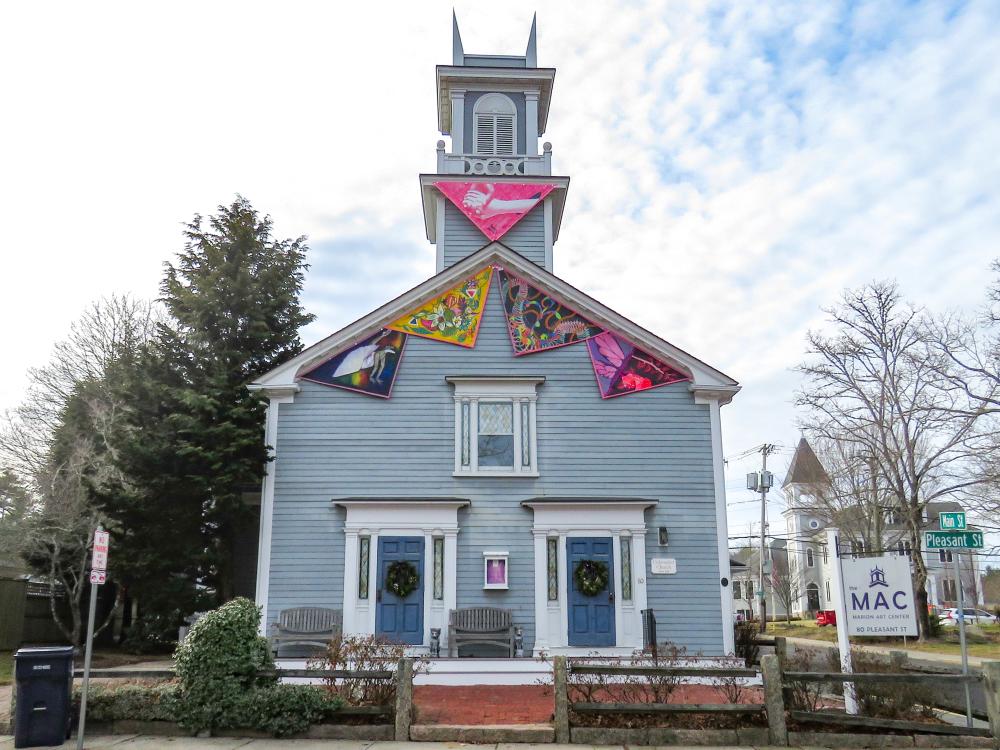 Colorful triangles of sailcloth adorn the outside of the Marion Art Center.
  The exhibit is a collaboration between the art center and the Massachusetts Design, Art, and Technology Institute.
  Along with painted designs, some panels also featured fabric and other decorations.
  The design of one panel depicts the South Coast region.
 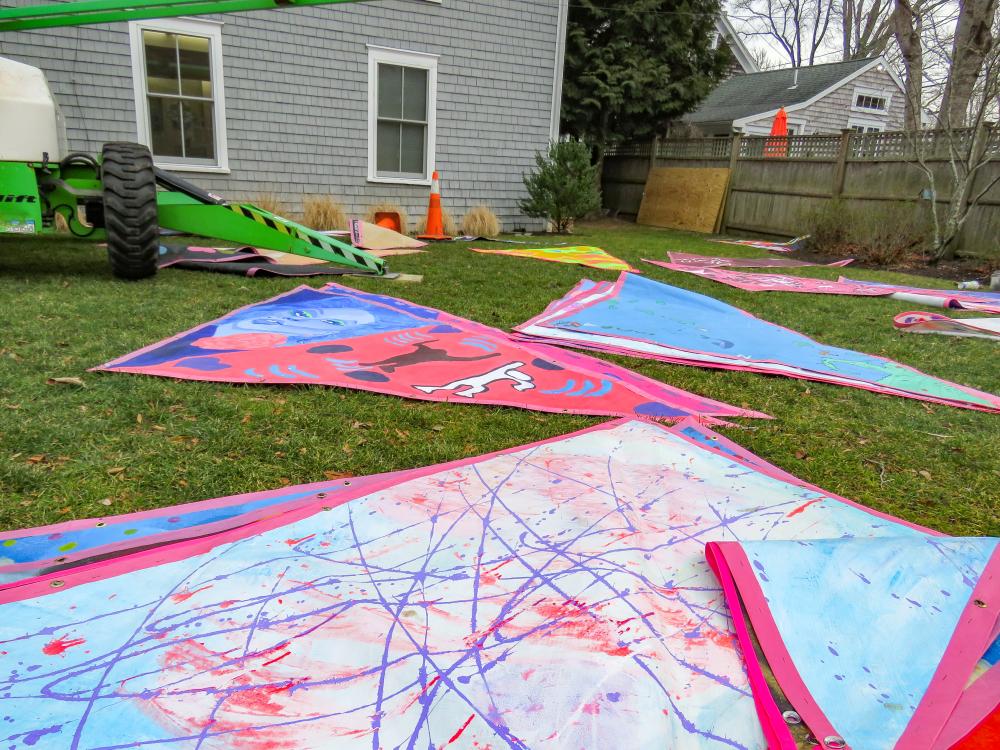 Panels for the display line the Marion Art Center's lawn.
Matt Moyer Bell, Massachusetts Design, Art, and Technology Institute's programs coordinator, installs part of the “Being Seen” display outside the Marion Art Center on Wednesday, Jan. 14. Photos by Grace Roche
Colorful triangles of sailcloth adorn the outside of the Marion Art Center.
The exhibit is a collaboration between the art center and the Massachusetts Design, Art, and Technology Institute.
Along with painted designs, some panels also featured fabric and other decorations.
The design of one panel depicts the South Coast region.
Panels for the display line the Marion Art Center's lawn.
Panels for the display line the Marion Art Center's lawn.
Matt Moyer Bell, Massachusetts Design, Art, and Technology Institute's programs coordinator, installs part of the “Being Seen” display outside the Marion Art Center on Wednesday, Jan. 14. Photos by Grace Roche
Colorful triangles of sailcloth adorn the outside of the Marion Art Center.
The exhibit is a collaboration between the art center and the Massachusetts Design, Art, and Technology Institute.
Along with painted designs, some panels also featured fabric and other decorations.
The design of one panel depicts the South Coast region.
Panels for the display line the Marion Art Center's lawn.
MARION — While there is always an abundance of art inside the Marion Art Center, a traveling exhibit is bringing a unique exhibit to its exterior.
A rainbow of decorated, triangular pieces of sailcloth have been installed on the center’s outer walls as part of a collaborative show celebrating LGBTQ+ history and culture in the South Coast.
It is part of the Massachusetts Design, Art, and Technology Institute’s “Being Seen” show, which originated in New Bedford during June 2025 and has since turned into a traveling public art exhibit.
Marion is the third stop on the exhibit’s journey, after it moved to Dartmouth in September.
The institute’s Executive Director Lindsay Miś helped organize the show, and installed it at the Marion Art Center with the help of a colleague.
Jodi Stevens, the executive director of the Marion Art Center, said Miś approached her last year to see if the center would be interested in hosting the traveling exhibit.
“To have an exterior piece and a public facing piece of art that people can see from the street is really exciting,” Stevens said. “All the neighbors are walking by and saying how much they love it.”
The center typically has eight shows a year, but Stevens said they added a ninth to accommodate “Being Seen.” Along with the outdoor display, a gallery inside the building will showcase art and artifacts celebrating LGBTQ+ Pride in the region.
Miś said the idea for the show came from a discussion of the United States’ 250th anniversary and the many firsts the country has seen, particularly for the LGBTQ+ community.
In 2004, Massachusetts became the first state to recognize same-sex marriage about a decade before it was legalized nationally. The South Coast was a particularly important area for the marriage equality movement, Miś said, and she wanted to incorporate this heritage into a new show.
“I hope that by people viewing the exhibition, they feel empowered and that even one person's voice can make a change and help better our community,” she said.
For Miś, the exhibit is partly a way to encourage people to engage with art outside of traditional settings and partly an act of activism.
She said many people think of art as something “elitist, for people who are uber educated or white.” However, her organization’s mission is to help people realize art is for everyone.
The exhibits inside the Marion Art Center are free to visit, but she said she wanted to create a display that didn’t even require people to enter a building. They can engage with it just by walking past.
“What we're trying to do with this really crazy spectacle is a little unconventional approach to displaying art. Our purpose is to get art out of the ‘white cube,’” she said, referring to art displayed in museums and galleries.
She said along with enjoying the aesthetics of the piece, she also hopes viewers will engage with its message.
Art can be a way to start conversations, she said, and can use people’s curiosity to think more deeply about a topic.
“You can have conversations that are a little bit more challenging when it's done through a visual story,” Miś said.
“People might not realize that this is an activism based piece, and that's okay. We want people to just have an experience with art,” she added.
The inside gallery will run Feb. 13 to March 13 with an opening celebration on Saturday, Feb. 14 from 3-5 p.m.