











Residents oppose new build at long-postponed Conservation Commission hearing
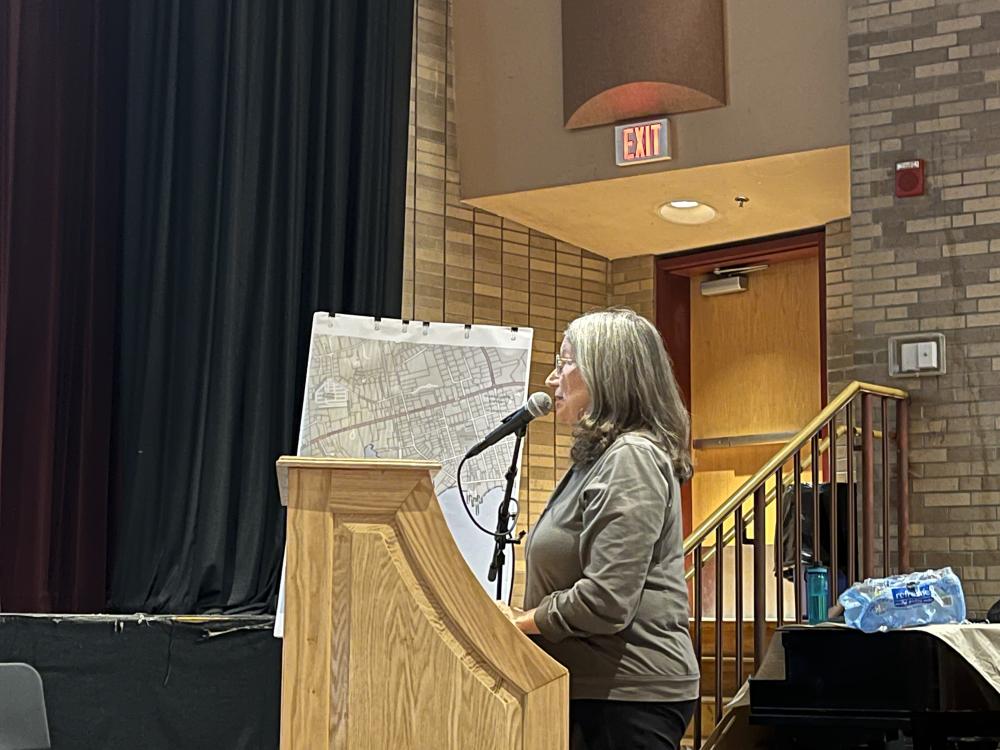 Sandy Hering speaks to the Conservation Commission during the Wednesday, Oct. meeting at Old Rochester Regional High School. Photos by Grace Roche
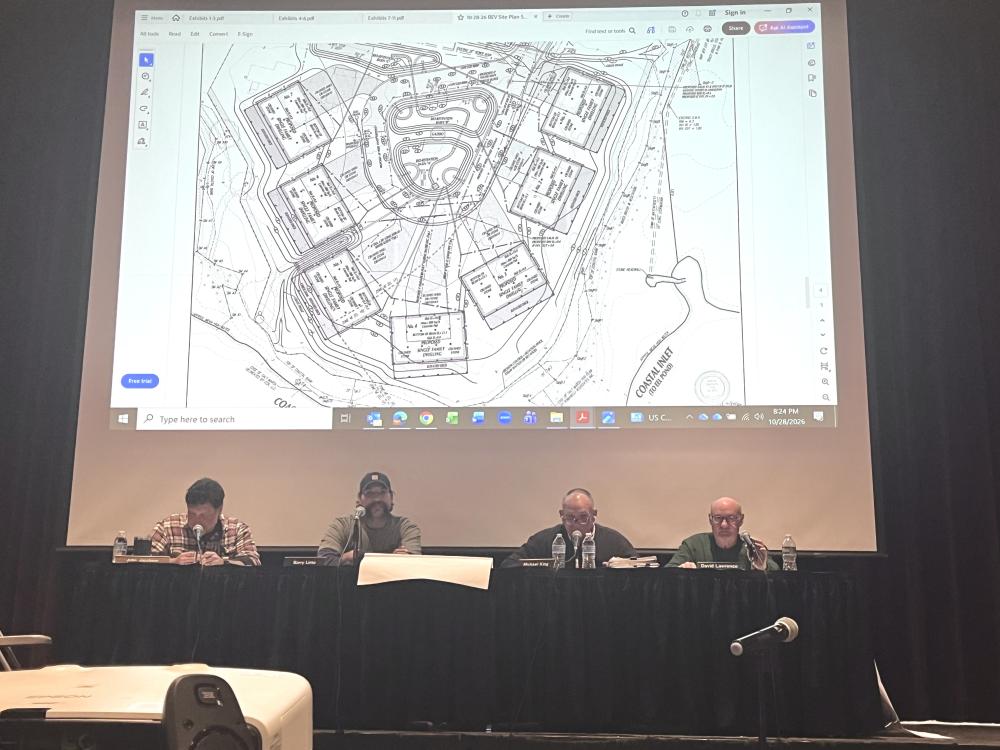 The Conservation Commission held its first hearing for proposed construction on Mahoney's Lane.
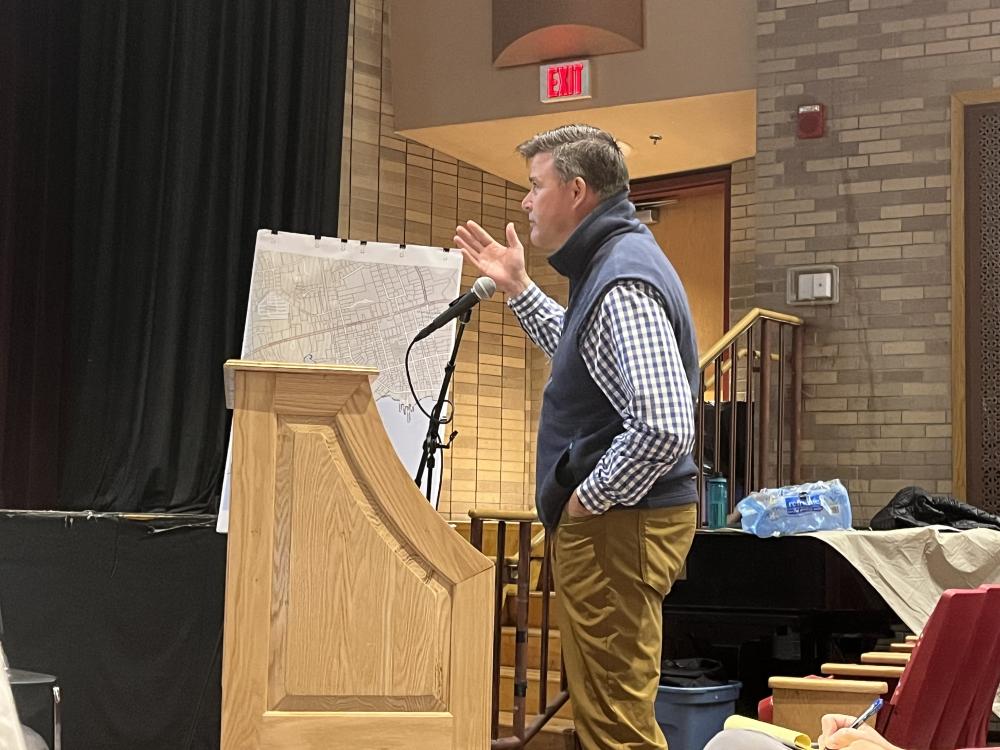 Todd Partridge speaks during the meeting.
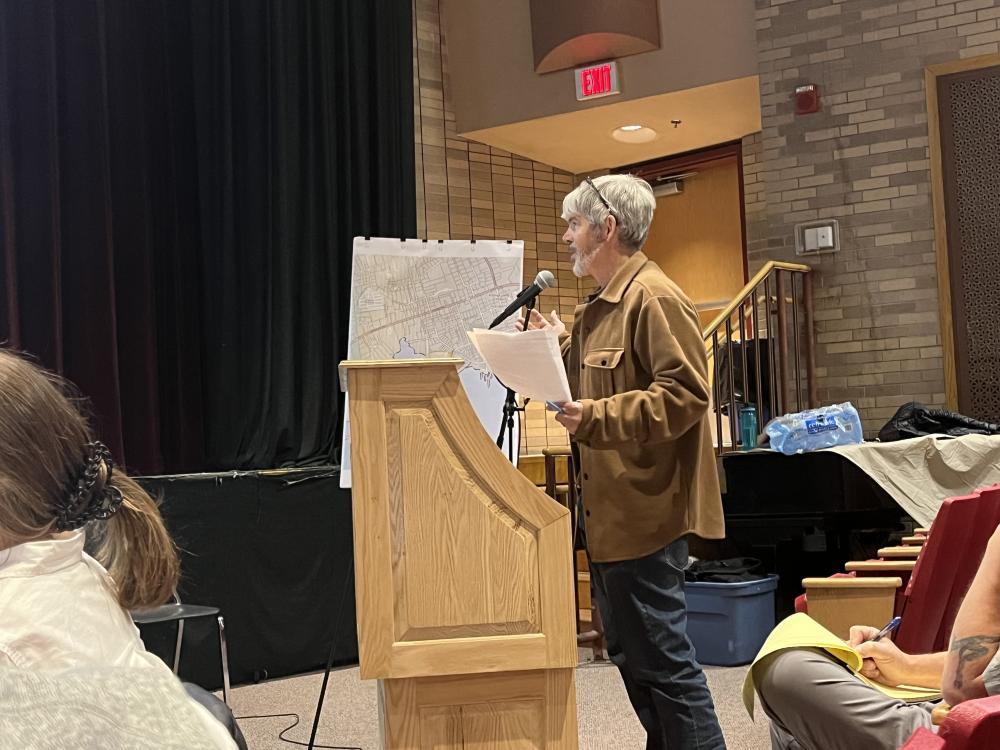 Mark Hess addresses the Conservation Commission.
Sandy Hering speaks to the Conservation Commission during the Wednesday, Oct. meeting at Old Rochester Regional High School. Photos by Grace Roche
The Conservation Commission held its first hearing for proposed construction on Mahoney's Lane.
Todd Partridge speaks during the meeting.
Mark Hess addresses the Conservation Commission.
MATTAPOISETT — After high resident turnout prevented the Conservation Commission from holding several previous hearings due to room capacity, a project proposing the reconstruction of seven houses on Mahoney’s Lane is finally moving forward.
The commission held a hearing for the project on Wednesday, Oct. 28 inside the Old Rochester Regional High School auditorium to accommodate about 115 residents who were concerned about the environmental impact the construction could have.
Developer Dennis Mahoney & Sons plans to replace several existing structures, currently rental houses, with larger single-family structures. Because the new houses would sit in a flood zone, the buildings would stand on stilts, with decks facing the water.
Salt marsh wetlands sit to the south and west of the property, with Eel Pond and the Mattapoisett Harbor close by.
Many residents said they oppose the project as proposed due to concerns that changes to grading around the bank and removing vegetation could pose threats to the vulnerable coastline in the event of a major storm.
Engineer David Davignon presented the project on the developer’s behalf. During his presentation, he said a large portion of trees on the property would be removed to make room for larger houses and the land’s topography would be changed close to where the bank begins.
Davignon said the developer is considering the project now because future legislation could make it much harder, or more expensive, to build on coastal properties.
Todd Partridge said the Conservation Commission’s job is to protect the town’s natural resources, not cater to the needs of developers.
“Are we here to protect the property owners' builders' rights to rebuild — and you've referenced this yourself — or are we here to actually protect the conservation in the land,” he asked Chair Michael King. “Are we trying to rush through and facilitate an application to protect builders' rights because we're afraid that the state is going to pass these new regulations?”
Samantha Carew, a wetland scientist from consulting firm Ecosystem Solutions, pointed to the tree removal and work close to the coastline as concerns the commission should consider during future hearings.
Sandy Hering said she is particularly concerned with removing trees from the area, as they can help prevent erosion.
“Trees have a massive root system, sometimes as deep as the height of the top of the tree,” she said. “In a storm surge, especially with sandy soils, it may help hold the soil.”
While the developer has proposed planting new vegetation near the water bank to offset the loss of trees, she urged the Conservation Commission to “seriously consider” their removal.
Mark Hess said the encroachment on a buffer zone between the new houses and protected land should be looked at on an individual level instead of site-wide.
He said the context of where each structure will lie should be taken into account, as each one encroaches on the buffer zone significantly more than the current houses do.
“An area that's mowed is not necessarily the same as an area that has a building on it, and an area that was lightly graded is not the same as an area that has been built up to terraform in order to change the entire grading and draining structure of an entire parcel of land.”
King said because Mattapoisett does not have any wetland protection bylaws, the Conservation Commission can only make decisions based on state environmental protection laws.
The next Conservation Commission meeting will be held Dec. 2.