











Traffic speeds among top concerns for Mattapoisett road reconstruction project
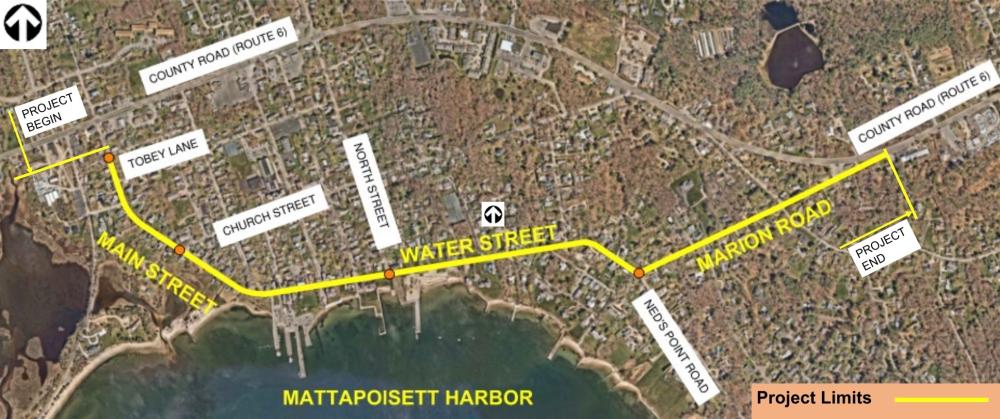 Map of the area of focus for the Mattapoisett road and sidewalk improvements. Source: MassDOT
 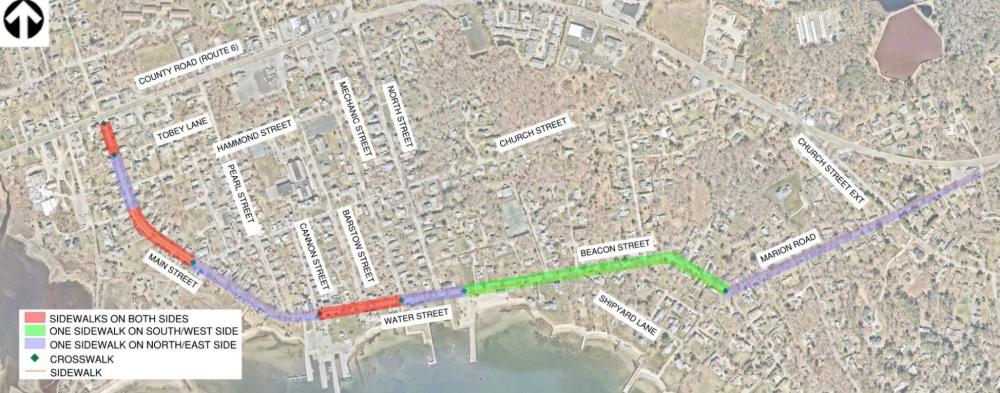 Proposed sidewalk connection plans. Source: MassDOT
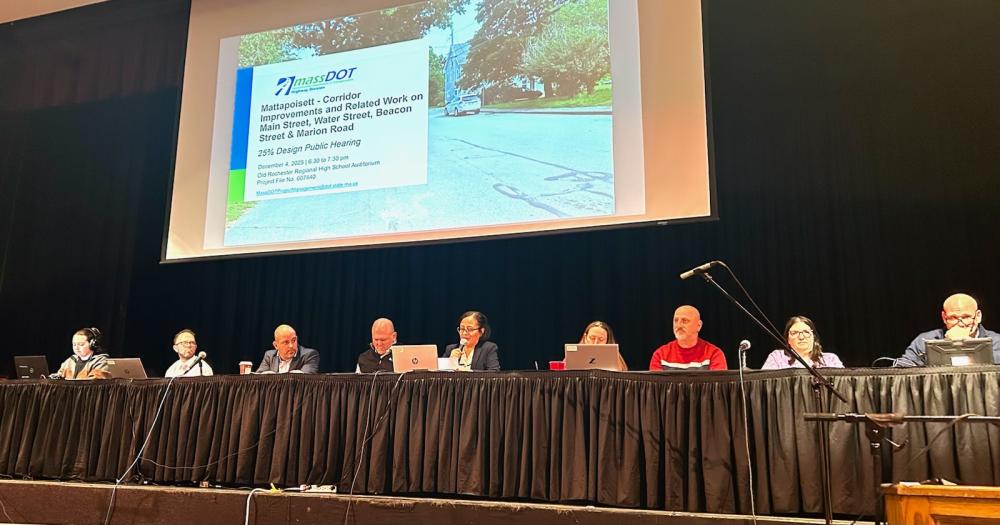 Mattapoisett Select Board and the Massachusetts Department of Transportation at Old Rochester Regional High School auditorium Thursday, Dec. 4. Photo by Mari Huglin
Map of the area of focus for the Mattapoisett road and sidewalk improvements. Source: MassDOT
Proposed sidewalk connection plans. Source: MassDOT
Mattapoisett Select Board and the Massachusetts Department of Transportation at Old Rochester Regional High School auditorium Thursday, Dec. 4. Photo by Mari Huglin
Mattapoisett Select Board and the Massachusetts Department of Transportation at Old Rochester Regional High School auditorium Thursday, Dec. 4. Photo by Mari Huglin
Map of the area of focus for the Mattapoisett road and sidewalk improvements. Source: MassDOT
Proposed sidewalk connection plans. Source: MassDOT
Mattapoisett Select Board and the Massachusetts Department of Transportation at Old Rochester Regional High School auditorium Thursday, Dec. 4. Photo by Mari Huglin
MATTAPOISETT — Town and state officials presented ongoing project plans to update several streets leading to Route 6 at a public hearing Thursday.
Representatives from the Massachusetts Department of Transportation and Town Administrator Michael Lorenco explained the proposed construction and asked for resident input at the Dec. 4 hearing. Attendees were most concerned with how the updated roads will slow traffic to safer speeds.
The project proposes widening Main Street, Water Street, Beacon Street and Marion Road to 24 feet and marking them as shared travel lanes to improve cyclist safety.
These improvements would stretch approximately 1.4 miles. The project includes reconstructing sidewalks and upgrading existing drainage and water systems.
Currently, these roads carry up to 2,000 vehicles per day. There are no bicycle lanes, and sidewalks are in poor condition, not continuous and do not meet ADA standards.
Bonnie DeSousa and other Mattapoisett residents said they were concerned about the lack of traffic calming measures — ways to slow drivers such as speed bumps, curves or narrower roads — in the initial plans.
“Many people have expressed a lot of concern about a wider road becoming a faster road because drivers perceive that they can go faster if the road is wider,” DeSousa said.
MassDOT representatives and Lorenco said they will consider such measures, but tend to avoid them as they can impede emergency service response times.
He said they are already small roads, and narrowing them further could pose a risk to the town.
“The fire chief and the police chief both don't want any of these traffic calming measures,” he said. “They believe the road — as squared away as it is today and as it will be after this project — will reduce the speeds, as it has for as long as that road has been there.”
Resident Christine McCormick said the town doesn’t have fire trucks or ambulances responding to emergencies every day, but people are always walking along these roads.
“Thank God, we don't have a fire every day,” McCormick said. “We don't even have ambulance runs every day, but we do have dozens of pedestrians in the winter and hundreds of pedestrians in the summer.”
Carlos DeSousa said he was concerned about the timing of the construction, and if it will obstruct access to businesses and homes. He also said that he was concerned over easements, legal agreements allowing the town to construct on private properties.
The representatives said as design plans are finalized, so will the construction timeline and details of easements.
Aidee Cira, the MassDOT project manager, said the current roads do not meet state or federal standards.
“The project is intended to improve mobility for all users — pedestrians, bicyclists and motorists — with the goal to enhance pedestrian connectivity,” Cira said.
Federal and state funds will cover part of the project. While the final cost has not yet been determined, $18.5 million of it will come from government funds, with the federal government supplying 80 percent of this money, and MassDOT providing the rest.
It is still unknown how much the town will need to spend on the project, but Lorenco said Mattapoisett’s goal is to keep it as low as possible for a low impact on the town budget and tax payers.
“This will be the most expensive road project in town, probably the most extensive one in our history,” Lorenco said.
Currently, the town plans to pay for the installation of a culvert on Water Street if approved by Town Meeting. It will cost between $1-2 million to add this drainage structure.
It will also pay for the easements during construction, piping for a new water line, along with the engineering, design, legal and borrowing costs.
The state will pay for the water line installation.
More information and details of the plan will be finalized in the future. Complete design plans are slated to be submitted in the spring of 2027, with construction projected to begin that winter.