












Federal, state grants help Marion Fire Department update equipment
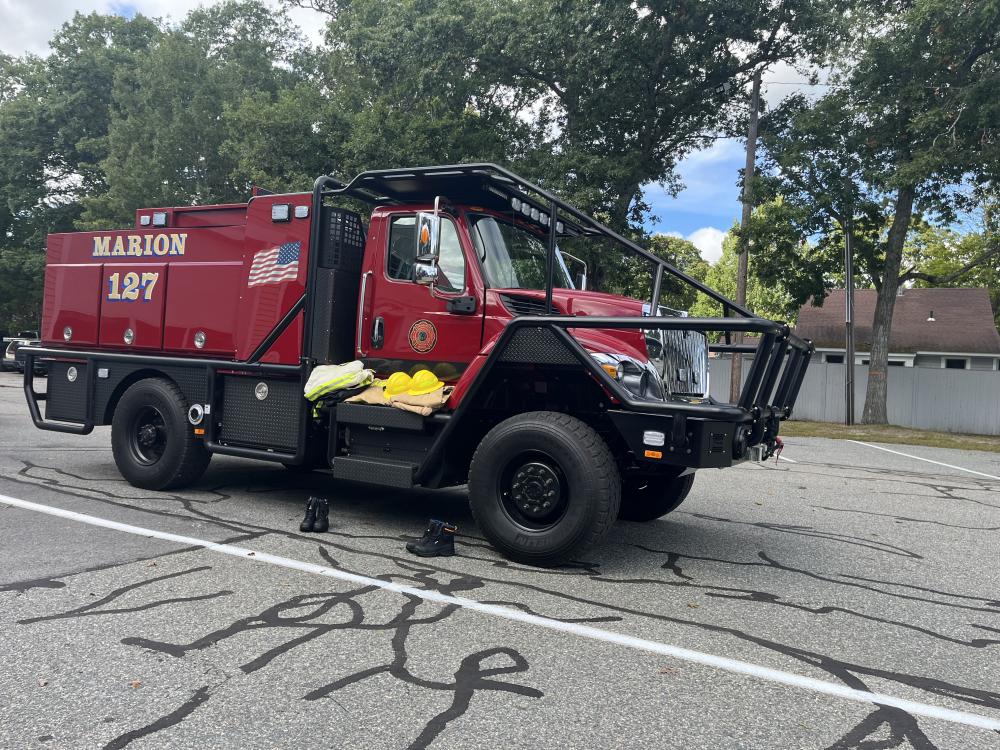 The Marion Fire Department received a grant for a brush breaker and new gear earlier this year. Photos by Grace Roche
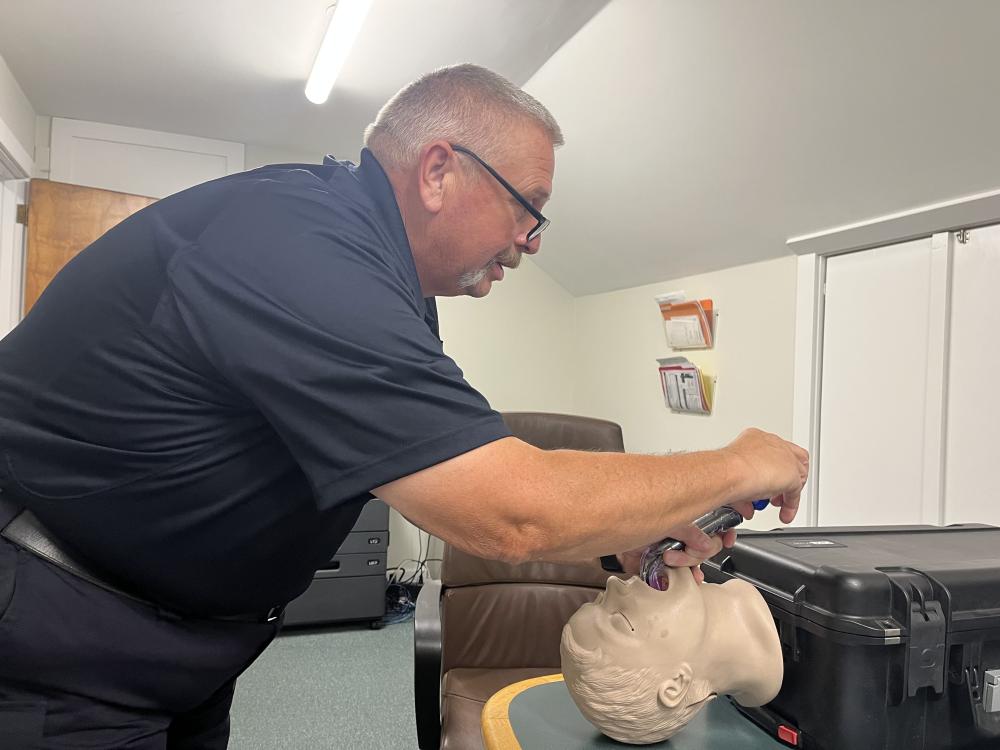 EMS Officer Philip Tura demonstrates how the new video laryngoscopes work.
The Marion Fire Department received a grant for a brush breaker and new gear earlier this year. Photos by Grace Roche
EMS Officer Philip Tura demonstrates how the new video laryngoscopes work.
EMS Officer Philip Tura demonstrates how the new video laryngoscopes work.
The Marion Fire Department received a grant for a brush breaker and new gear earlier this year. Photos by Grace Roche
EMS Officer Philip Tura demonstrates how the new video laryngoscopes work.
MARION — A new heavy-duty firefighting vehicle is among several new pieces of equipment the Marion Fire Department recently purchased through state and federal grants it has received.
Fire Chief Brian Jackvony credited teamwork between Fire Department staff and the town’s grant administrator, Amy Jackson-Grove, for the department’s ability to pursue and receive grants that provide equipment while saving taxpayer dollars.
The department secured a grant to cover most of the cost for a brush breaker, a rugged vehicle used to fight fires in forests and other off-road locations, and received the custom-build truck earlier this year.
The federal Assistance to Firefighters Grants Program covered $285,000 of the $360,000 cost for the brush breaker.
It took about four years to receive the grant, and about 18 months to custom-build the truck. Jackvony said once the vehicle is fitted with some more equipment and department personnel receive training it will be ready for service.
The Fire Department hasn’t purchased a similar vehicle since 1964, and has relied on vehicles that were retrofitted or fabricated in house.
“There's an inherent safety issue when you make your own truck because it's not designed and tested, but this is designed on you know engineered design and tested specifically for that purpose,” Jackvony said.
The department also received a grant for new, lighter gear for crews to wear when using the brush breaker.
Along with grants for the brush breaker and coordinating protective equipment, the department has received a number of other grants.
An $18,000 federal grant will cover the purchase of new iPads and protective cases for each apparatus, along with two new stair chairs, which allow first responders to move people up or down stairs.
Twelve firefighters were screened for throat esophageal cancer through a $7,500 grant from the Massachusetts Interlocal Insurance Association.
The Southcoast Health awarded the department $7,500 for three video laryngoscopes. This equipment allows first responders to see into a person’s throat when inserting a breathing tube.
Contact Name