











Rochester residents oppose rezoning proposal
 The Planning Board welcomed feedback during its Feb. 10 public hearing. Photos by Grace Roche
 Deb Carr was among many residents who attended the meeting and expressed concern over the rezoning proposal.
The Planning Board welcomed feedback during its Feb. 10 public hearing. Photos by Grace Roche
Deb Carr was among many residents who attended the meeting and expressed concern over the rezoning proposal.
Deb Carr was among many residents who attended the meeting and expressed concern over the rezoning proposal.
The Planning Board welcomed feedback during its Feb. 10 public hearing. Photos by Grace Roche
Deb Carr was among many residents who attended the meeting and expressed concern over the rezoning proposal.
ROCHESTER — Over 30 people packed a Town Hall meeting room to express their concerns regarding a rezoning proposal for several properties on and around Mary’s Pond Road.
After over two hours of discussion and a majority of residents expressing opposition to the proposal, the Planning Board voted at its Feb. 10 meeting to continue the hearing until March 10.
Included in this proposed rezoning are lots at 0 Mary’s Pond Road, a home and surrounding land at 73 County Road, and the properties Murphy’s Towing, located at 35 County Road, and Adrian's Package Store, at 711 Mary’s Pond Road, sit on.
Because board member Michael Murphy owns one of these properties, he abstained from discussion.
A parcel at 0 High St. was removed at the beginning of the meeting, while the land the former Decas processing plant sits on was added.
During an initial presentation, members of the Planning Board and Town Planner Michaela Shoemaker explained why the town is considering a change from residential and agricultural to limited commercial zoning.
Shoemaker said it would encourage commercial activity within the town and bring in higher tax revenue without the town needing to spend money providing services — such as public school enrollment or Council on Aging access — if commercial, instead of residential, developments are built on the considered lots.
“The goal of the limited commercial and the mixed use zoning is not growth just to have growth,” she said. “We are trying to protect the homeowners by stabilizing the tax rate, and then we're ensuring the town can afford services without having to continually increase all of your taxes.”
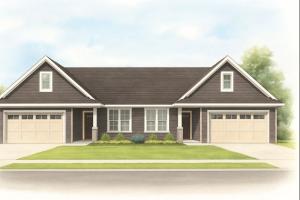
A 12-unit single family townhouse development has been proposed on one of the properties. Planning Board members argued a zoning change could encourage the developer, a real estate company owned by George Haseotes, to build commercial structures on the land instead.
Board Chairman Arnold Johnson emphasized the zoning change would not mean residential buildings must change to commercial ones. The new zoning gives property owners additional options for development.
“It allows them to be more creative in their design, maybe create something with more affordable housing instead of big houses in there, and maybe some little local businesses that would be able to locate in that area,” Johnson said.
Resident Jeff Costa said he is concerned rezoning will make it easier for commercial developers to build anything they want on the selected lots, and doesn’t believe the town should change its zoning for the area.
“I couldn't disagree more with our town administrator or our town planner,” Costa said. “I'm not buying what you all are selling.”
Fellow resident Nicholas Araujo echoed these concerns, and said he worried rezoning would open the door to larger businesses opening in the area and disrupting the residents of the surrounding properties.
Attorney Kerin Browning, who represents a group of residents and submitted a letter to the Planning Board outlining why she believes the rezoning is not legal, brought up several complaints.
Her main argument was the zoning change does not match the town’s Master Plan goal of preserving the rural character and appears to be “spot zoning,” which is when an area is zoned differently than surrounding properties without a clear benefit to the town.
“Your economic development section talks about how rural character has to be preserved and agriculture has to be preserved,” Browning said. “I've been doing this for a long time. I have never seen an economic development section of a master plan so focused on protecting rural and agriculture.”
Regardless of the board's March 10 decision, voters will ultimately decide on the rezoning proposal at Town Meeting.