











Sixth graders, librarian study possible Native American ceremonial area
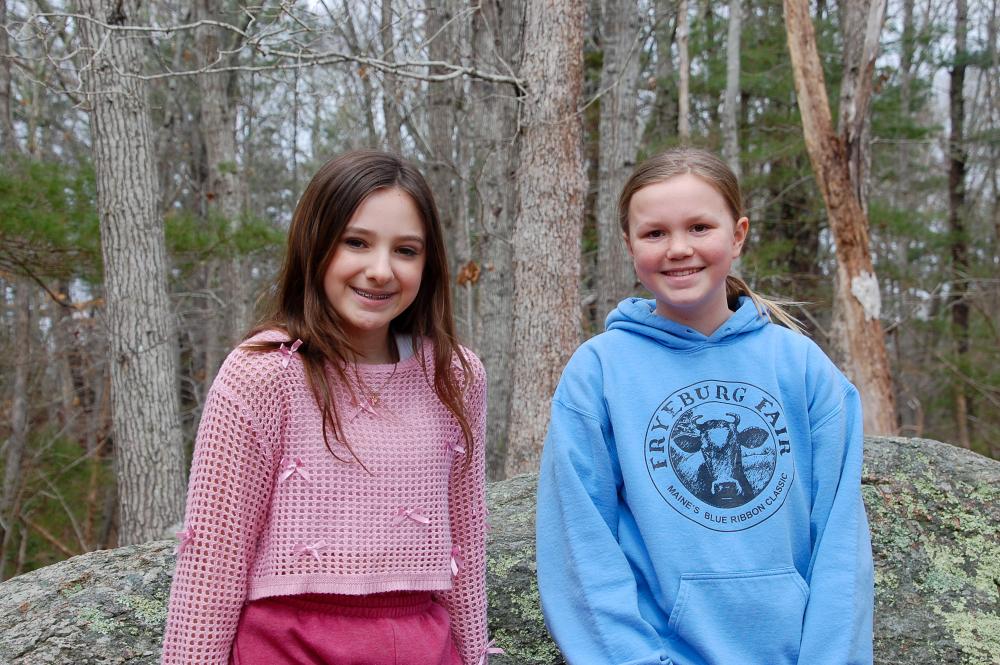 Maya Leech and Emily Collyer meet with Laura Mirabito two to three days a week to research the possible ceremonial rock wall. Photos by Mari Huglin
 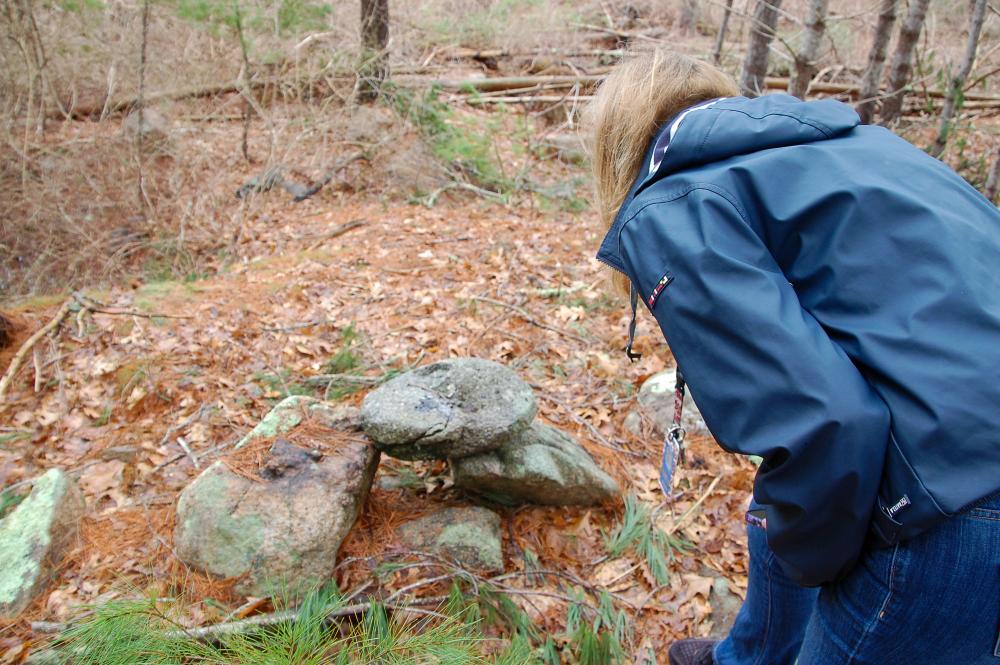 Laura Mirabito studies a rock formation behind Old Hammondtown Elementary.
 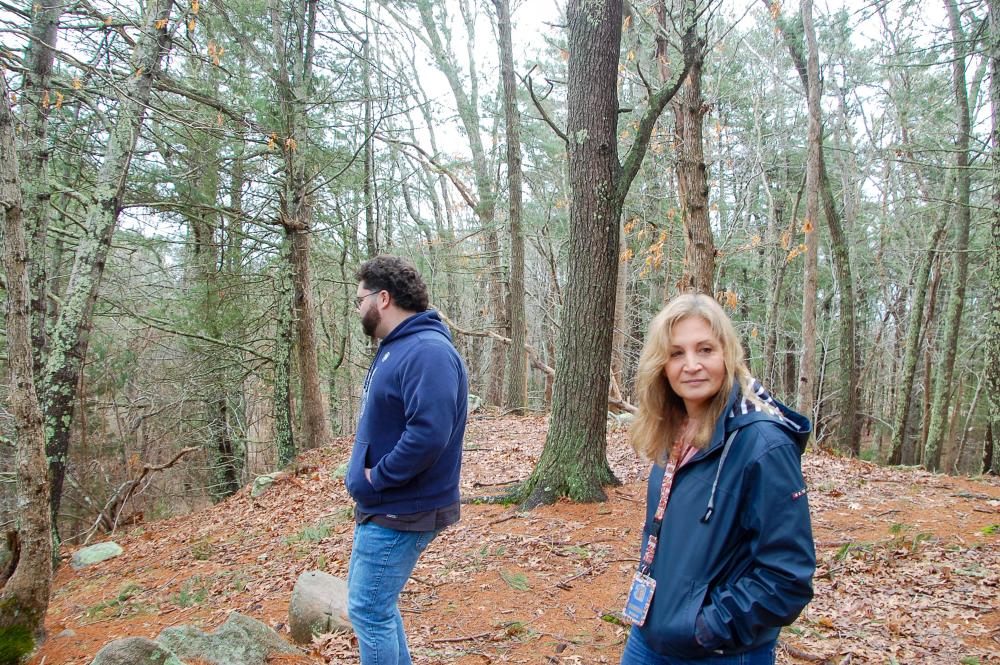 Mirabito shows where a Native American ceremonial site could have been.
 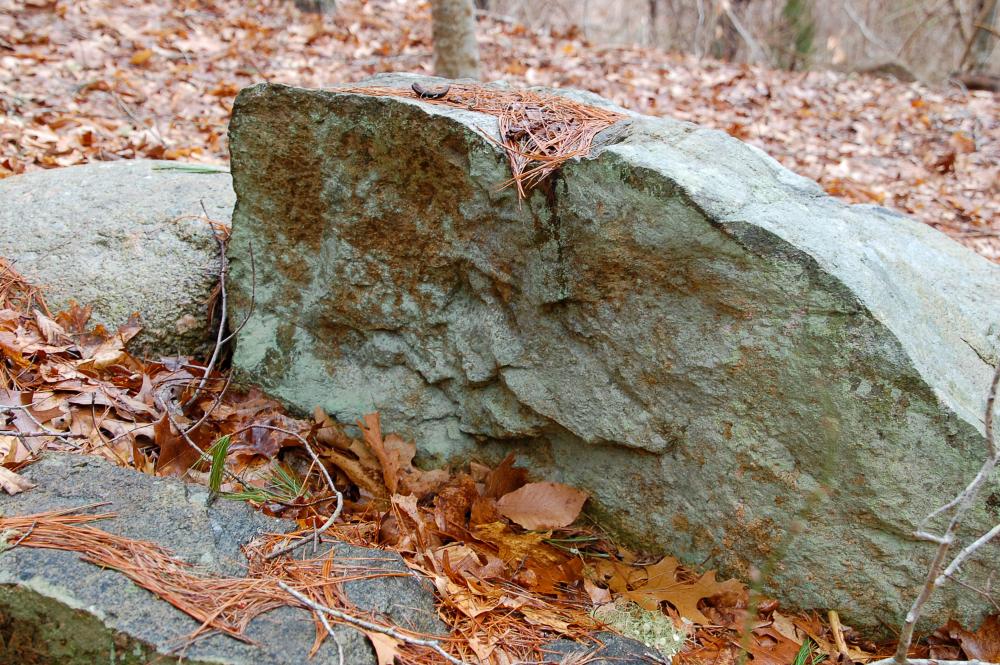 Some rocks had unique shapes or possible carvings in them.
 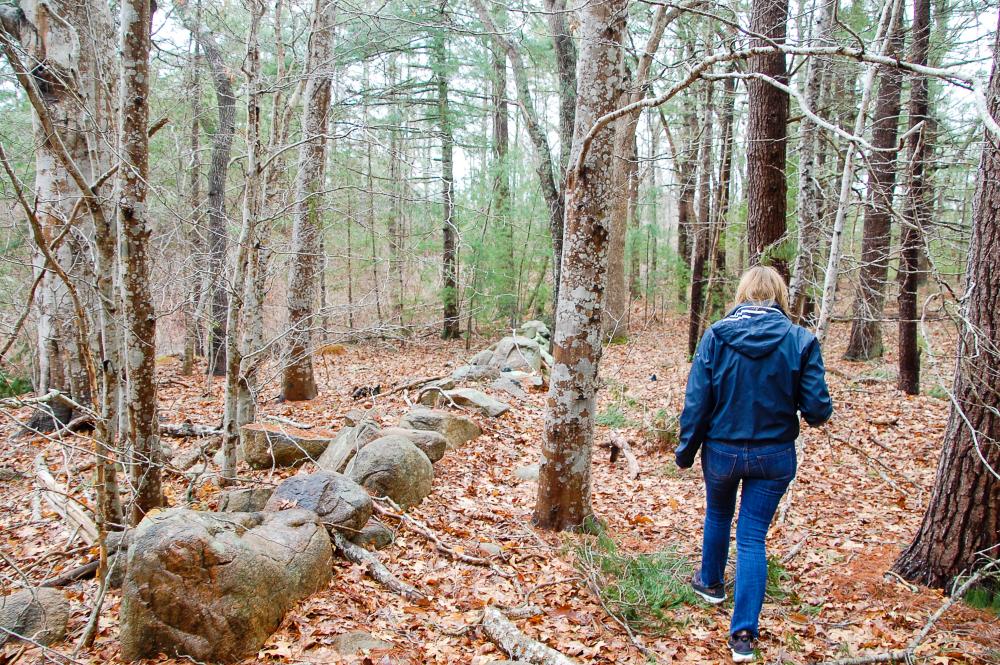 The possible wall runs from north to south.
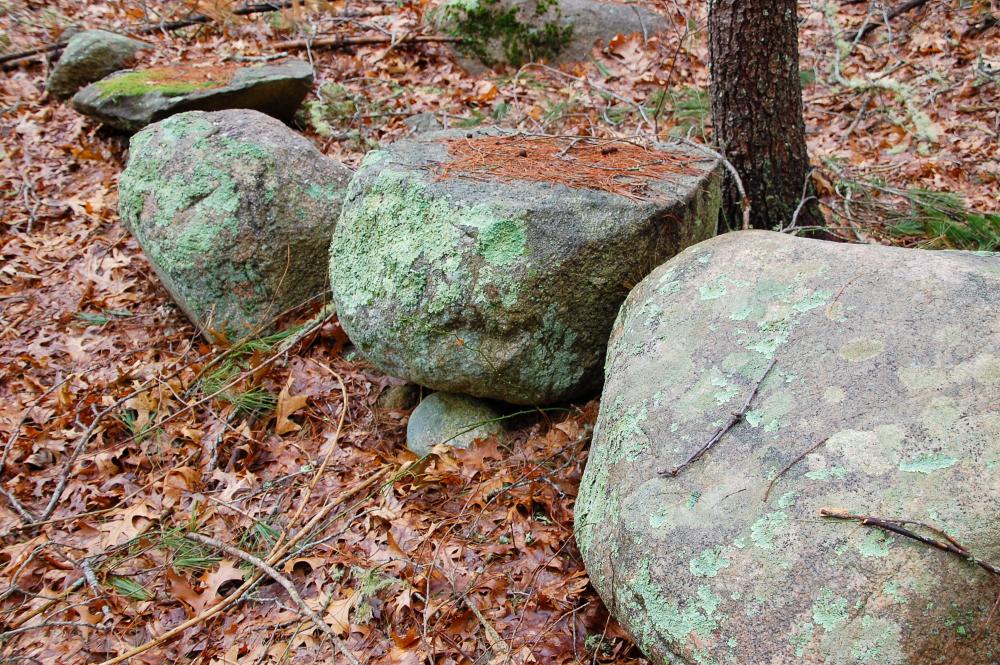
 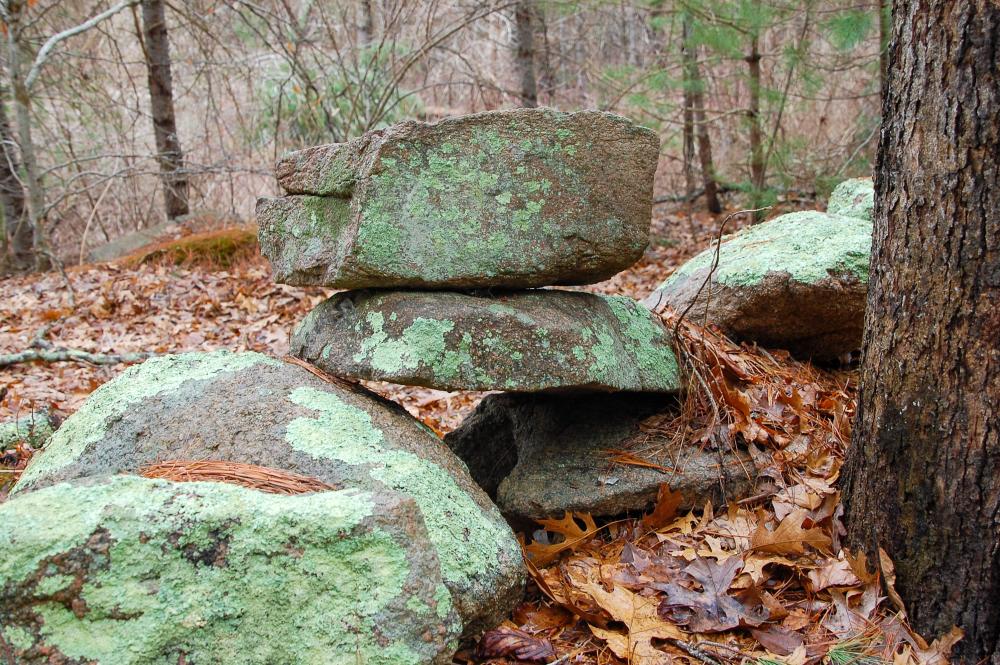 Big rocks and boulders were placed on eachother to make a wall.
 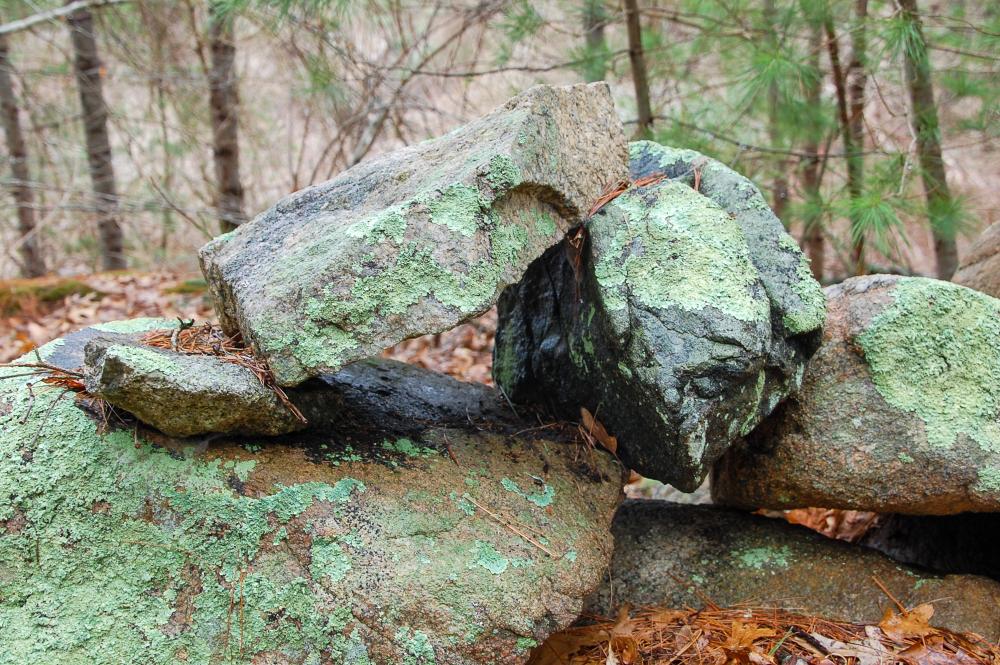 Some Native American ceremonial walls were known to have little windows for offerings.
 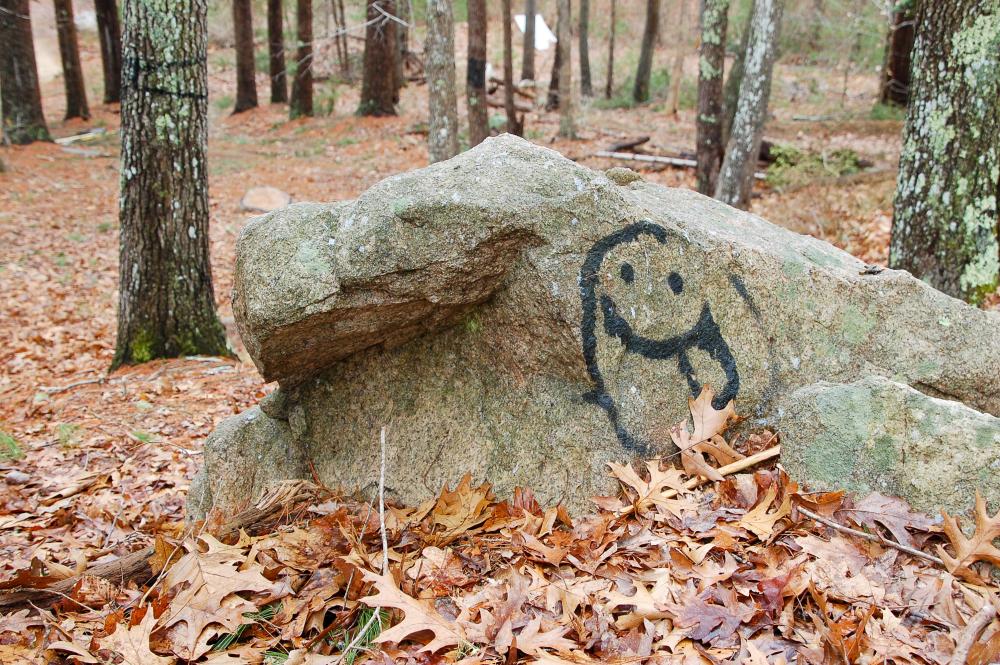 Graffitti adorns some of the rocks.
 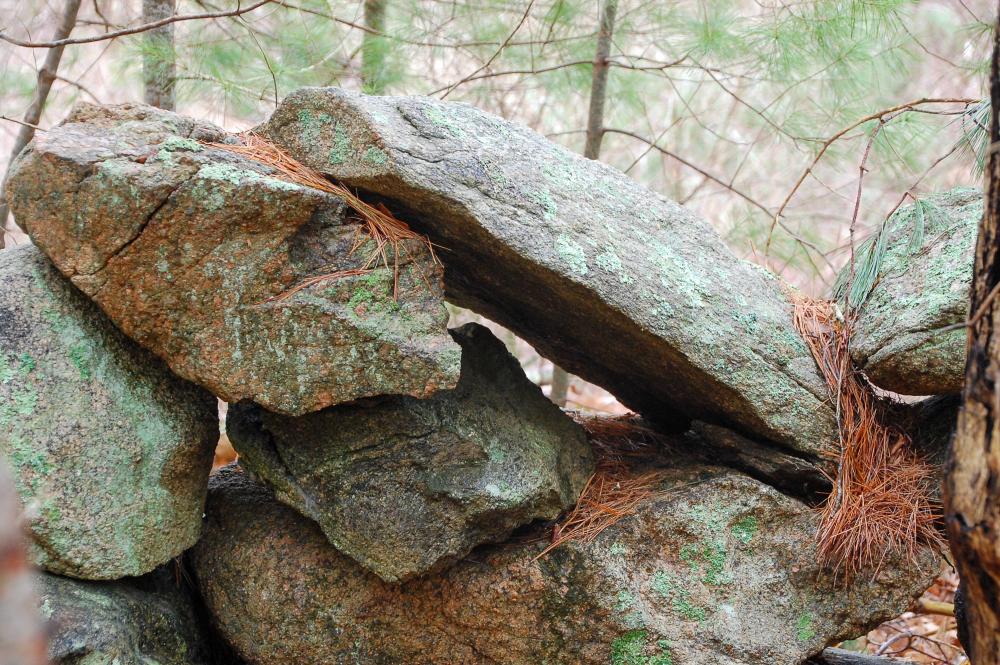 Rocks lean on eachother.
 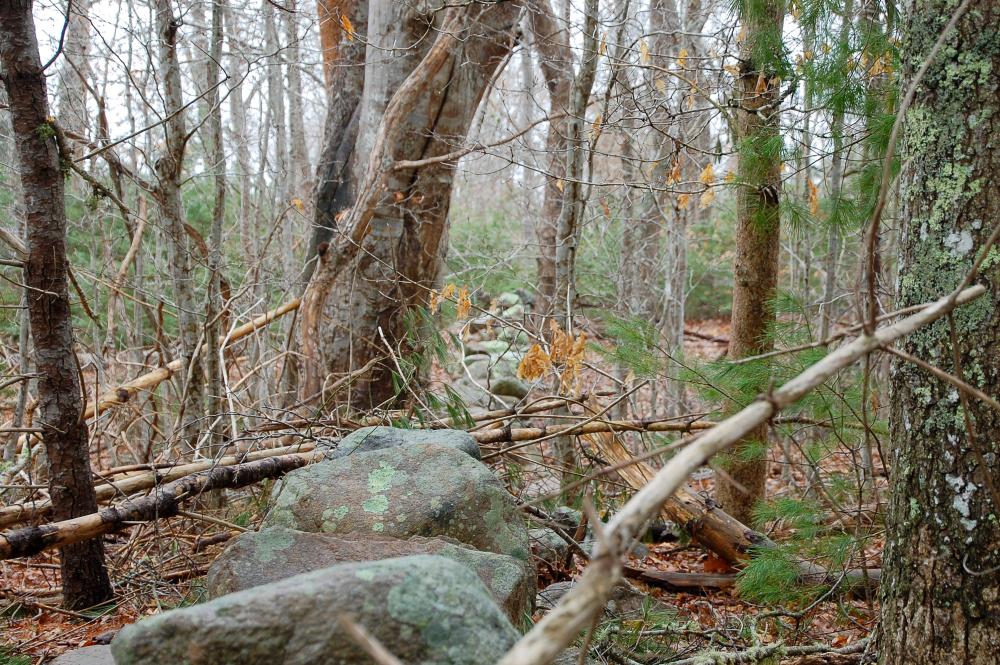 The rock wall keeps going by the river.
 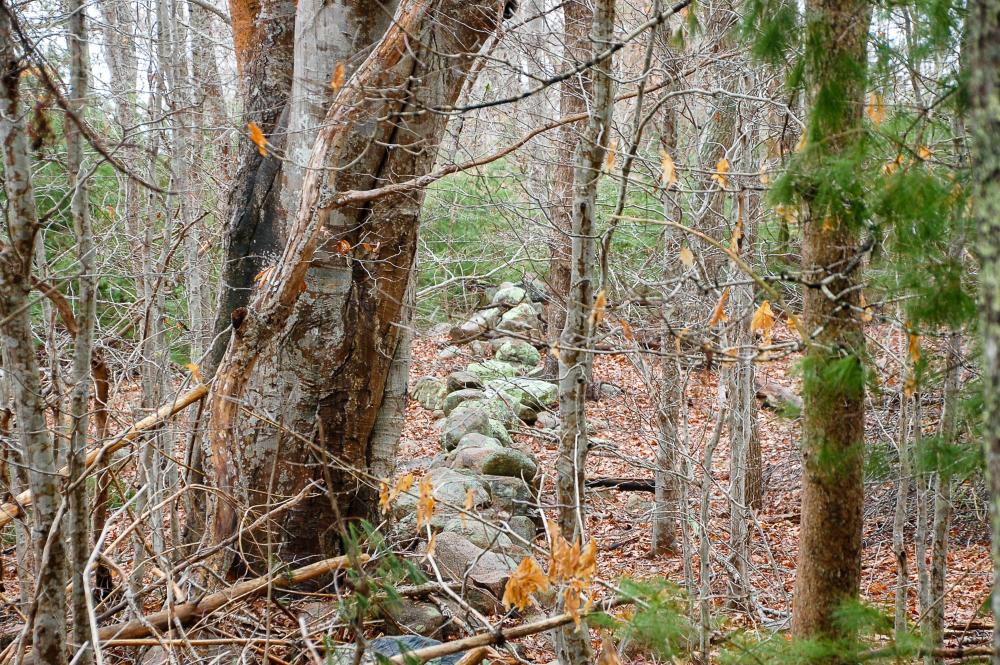 Rocks go up and down the hill.
 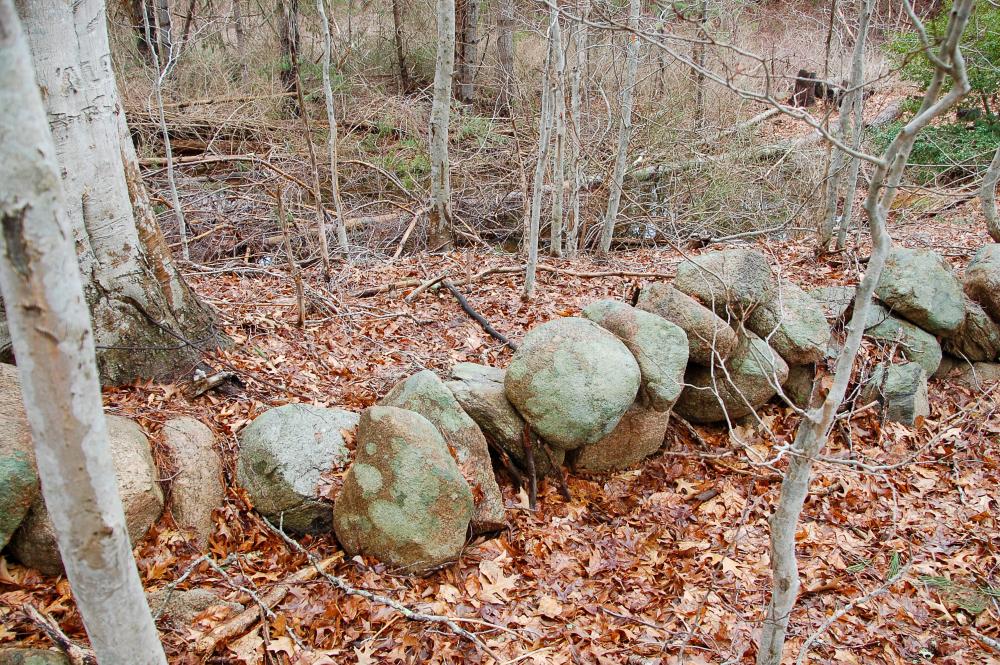 The Wampanoag tribe will soon come investigate the wall site.
 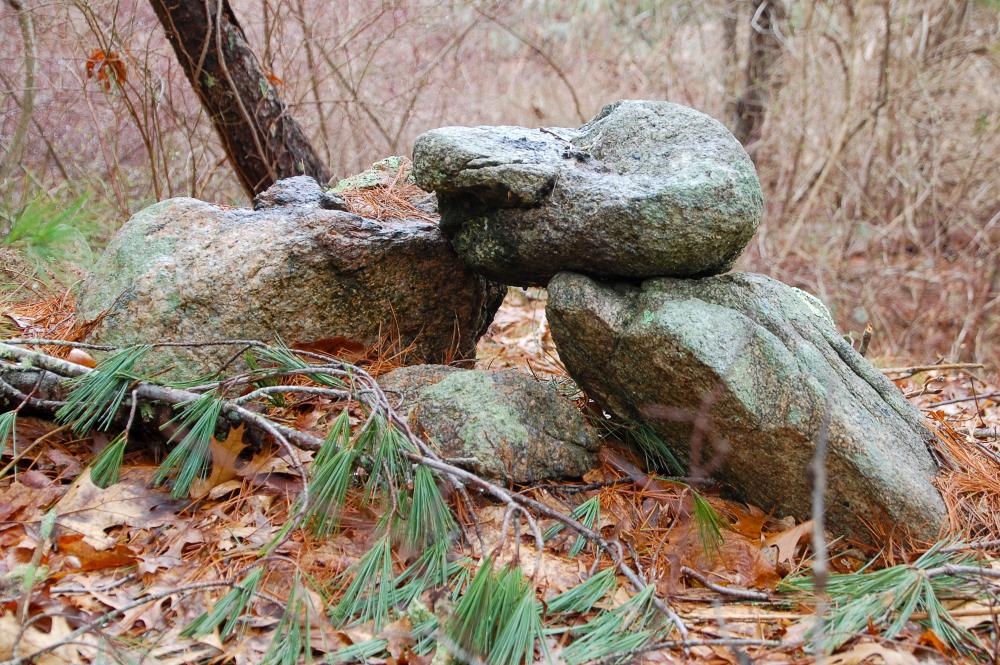 More rocks make little "niches".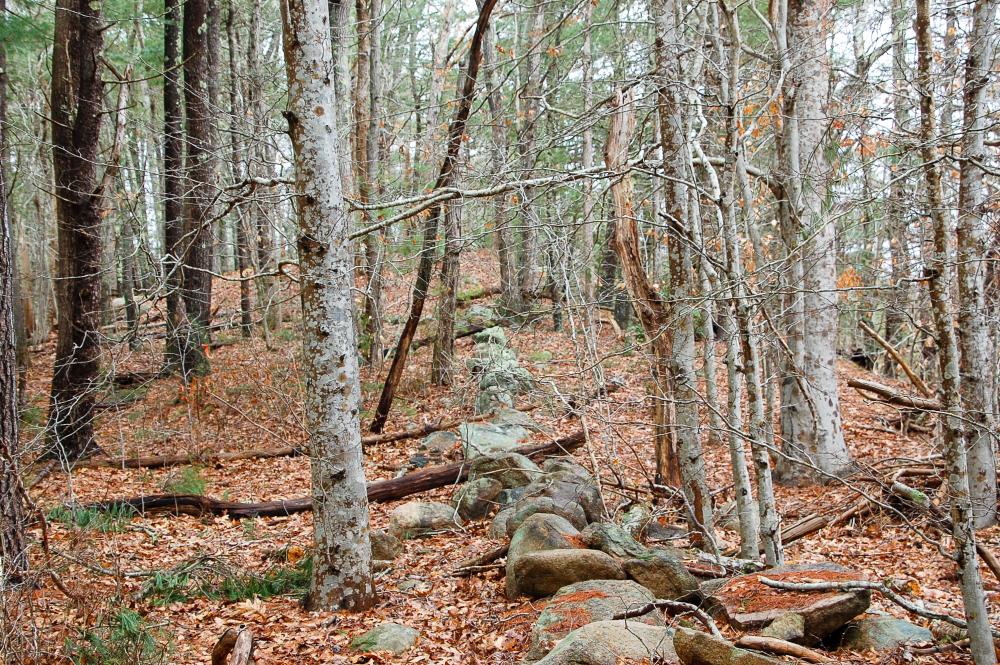
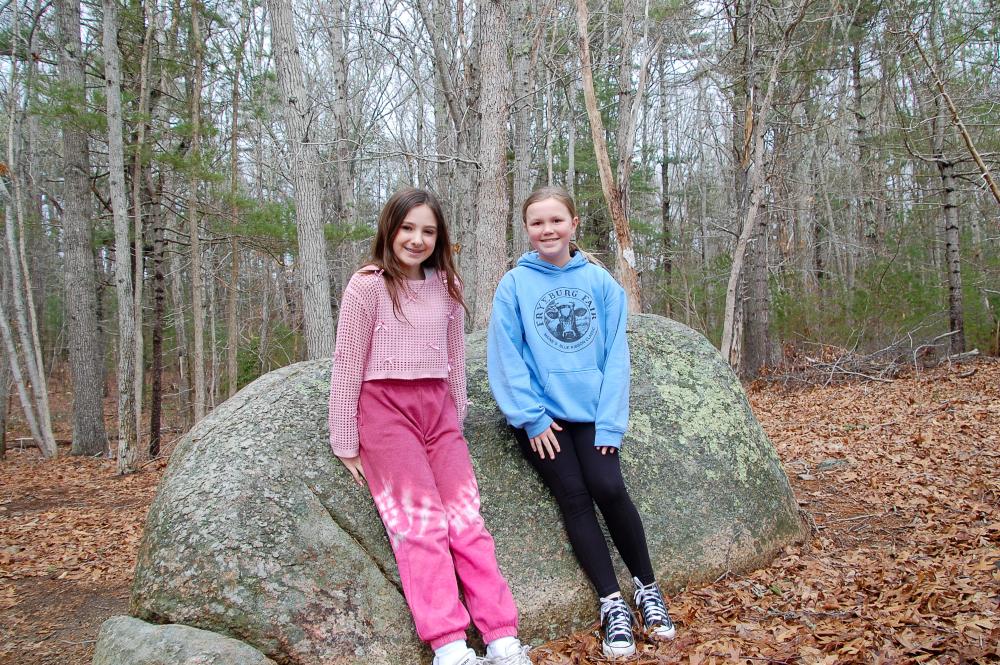 Maya Leech and Emily Collyer sit on a rock outside of Old Hammondtown.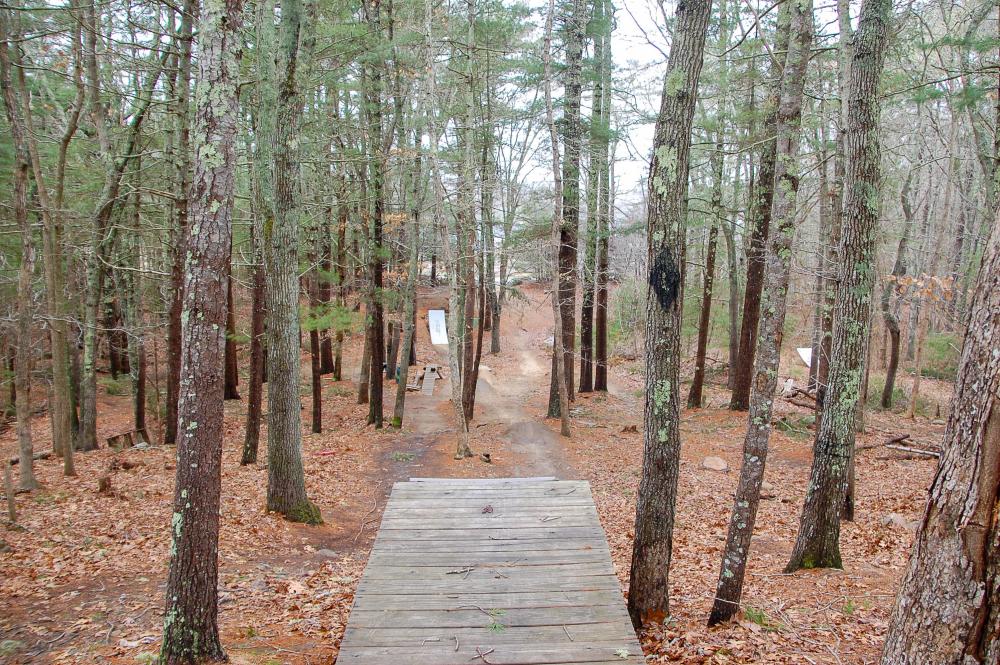
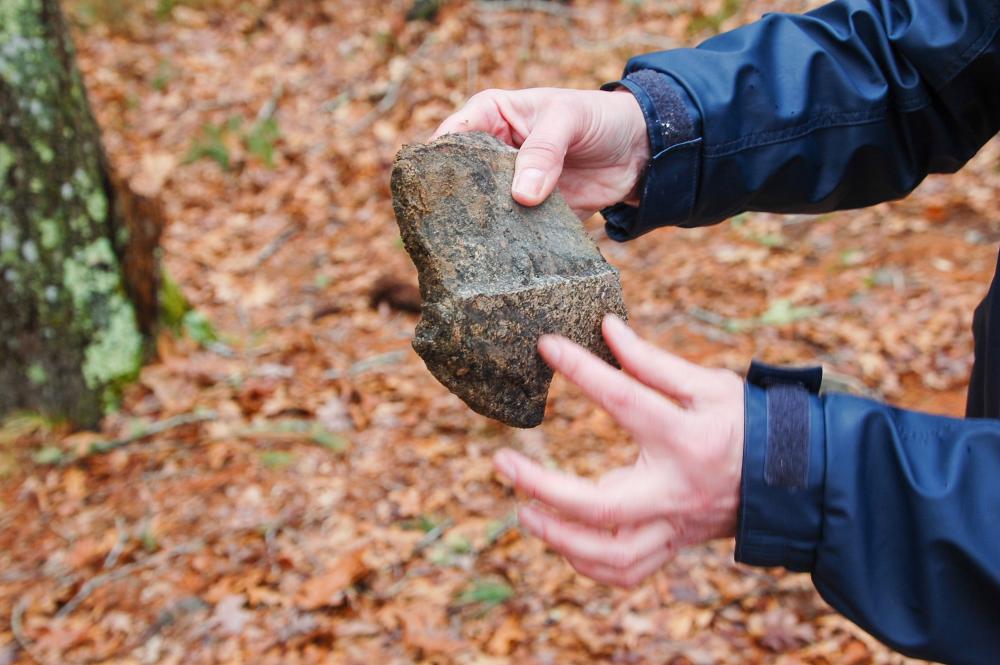 Mirabito shows certain angles in the rocks could have been carved by Native Americans.
 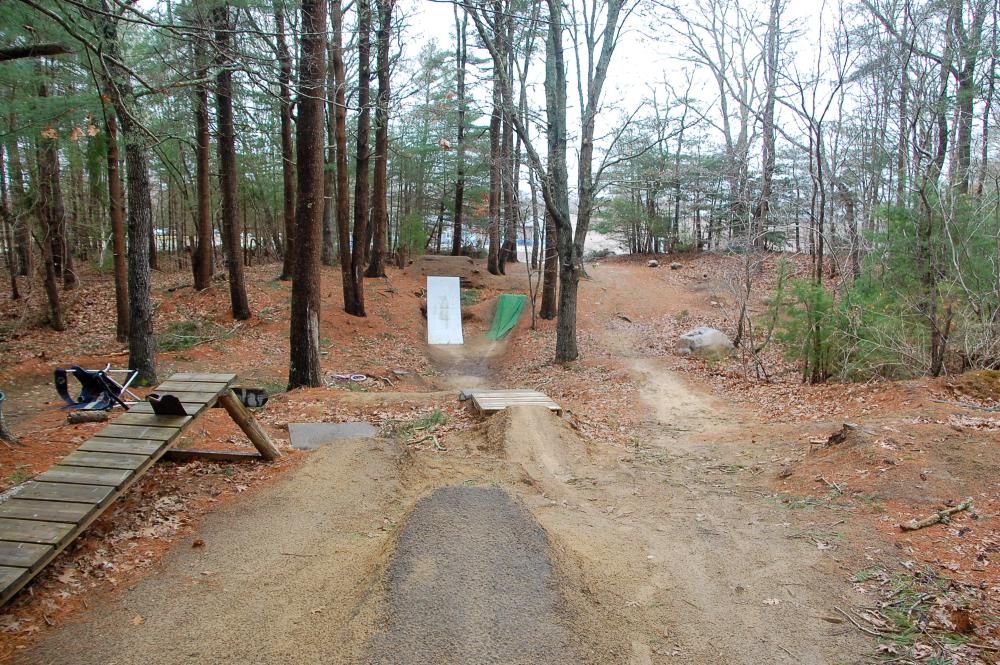 A dirt and mountain bike course is where the wall is located.
Maya Leech and Emily Collyer meet with Laura Mirabito two to three days a week to research the possible ceremonial rock wall. Photos by Mari Huglin
Laura Mirabito studies a rock formation behind Old Hammondtown Elementary.
Mirabito shows where a Native American ceremonial site could have been.
Some rocks had unique shapes or possible carvings in them.
The possible wall runs from north to south.
Big rocks and boulders were placed on eachother to make a wall.
Some Native American ceremonial walls were known to have little windows for offerings.
Graffitti adorns some of the rocks.
Rocks lean on eachother.
The rock wall keeps going by the river.
Rocks go up and down the hill.
The Wampanoag tribe will soon come investigate the wall site.
More rocks make little "niches".
Maya Leech and Emily Collyer sit on a rock outside of Old Hammondtown.
Mirabito shows certain angles in the rocks could have been carved by Native Americans.
A dirt and mountain bike course is where the wall is located.
A dirt and mountain bike course is where the wall is located.
Maya Leech and Emily Collyer meet with Laura Mirabito two to three days a week to research the possible ceremonial rock wall. Photos by Mari Huglin
Laura Mirabito studies a rock formation behind Old Hammondtown Elementary.
Mirabito shows where a Native American ceremonial site could have been.
Some rocks had unique shapes or possible carvings in them.
The possible wall runs from north to south.
Big rocks and boulders were placed on eachother to make a wall.
Some Native American ceremonial walls were known to have little windows for offerings.
Graffitti adorns some of the rocks.
Rocks lean on eachother.
The rock wall keeps going by the river.
Rocks go up and down the hill.
The Wampanoag tribe will soon come investigate the wall site.
More rocks make little "niches".
Maya Leech and Emily Collyer sit on a rock outside of Old Hammondtown.
Mirabito shows certain angles in the rocks could have been carved by Native Americans.
A dirt and mountain bike course is where the wall is located.
MATTAPOISETT — Old Hammondtown librarian Lauren Mirabito had been walking behind the elementary school for years when she one day realized the pattern of rocks and boulders may signify an Native American ceremonial area.
Mirabito then looked at a website which superimposes a modern map of Mattapoisett over one from 1856, which marked the area behind Old Hammondtown as an “Indian Cemetery."
She said the site may be host to a ceremonial area and wall that Native Americans used. Mirabito then introduced the area and her hypothesis to the sixth graders of Old Hammondtown who began to research the area's significance.
Nothing is official as of right now and Mirabito has made it clear “this is all conjecture at this point”. She hopes it is the beginning of extensive research and collaboration.
Sixth graders were assigned different pieces of the puzzle to research, including who owns the property the land is on and the history of Native American ceremonial practices.
Maya Leech and Emily Collyer are two of the sixth graders who have taken a strong interest in the project, and continue to work with Mirabito.
“Its kind of cool that it's right behind our school and that if it is a burial ground people used to go back there to bury the dead,” Leech said.
Mirabito has reached out to Mattapoisett residents, the Mattapoisett Land Trust, town officials and the Wampanoag tribe to learn more.
Mirabito, Leech and Collyer agree that it is most likely the town owns the area.
Mirabito believes the area and wall could have been built by Native Americans because of similarities it has to other ceremonial walls in New England. For example, these walls were usually built from north to south, near water and are made of large stones settlers would not have used.
These walls also have little windows or “niches” in them that Native Americans may have used to place offerings.
“I guess maybe somebody will help us fill in all the pieces because I think there are a lot of stories out there, but a lot of the stories are conflicting,” Mirabito said.
Mirabito and the girls said they hope to bring awareness, respect and possible preservation to the area.
“Even if we just told people about it and you weren't allowed to bike over there— even if we don't clean it up— it would be better for us to spread awareness,” Leech said.
Mirabito said she thinks the community should come together to make a decision on how to move forward.
“As a community, I think we have to figure out what that investigation is going to look like,” Mirabito said.