












From hive to honey: A Rochester beekeeper’s story
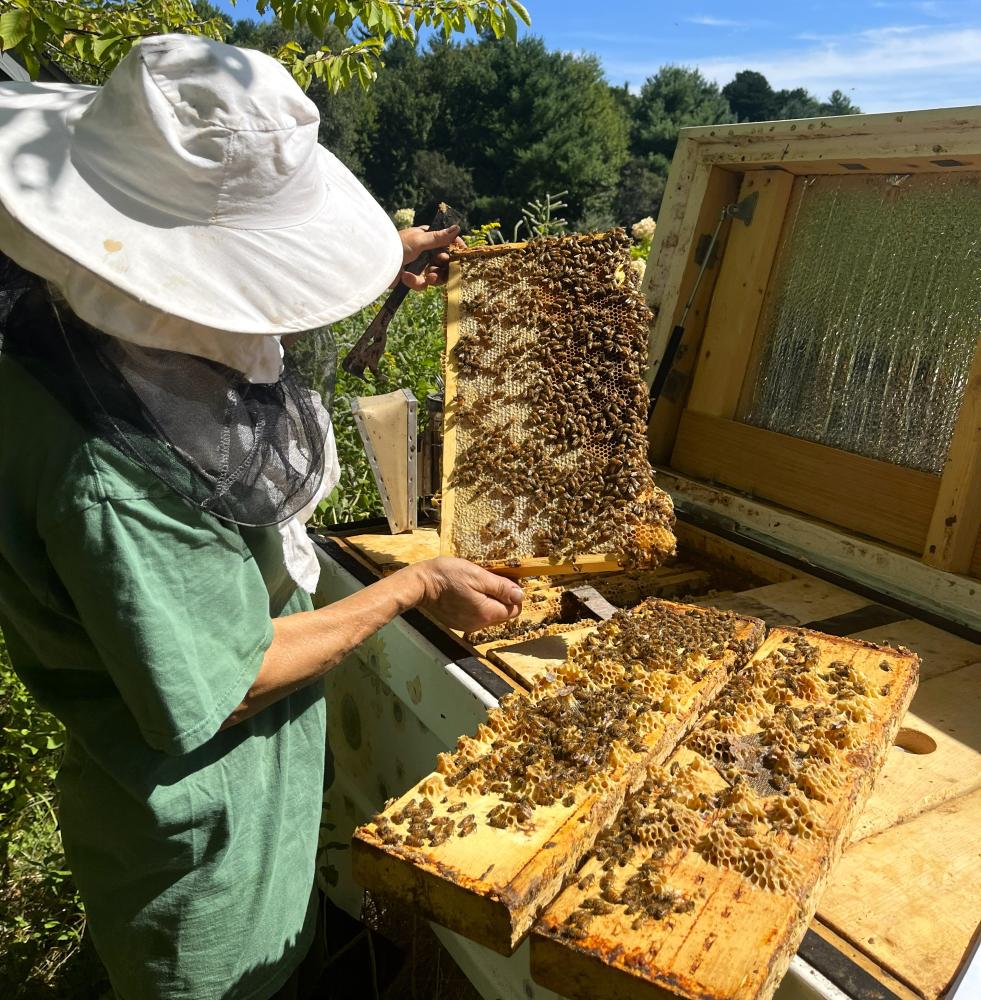 Nettie often speaks or hums to the bees, "whatever comes to my head," she said.
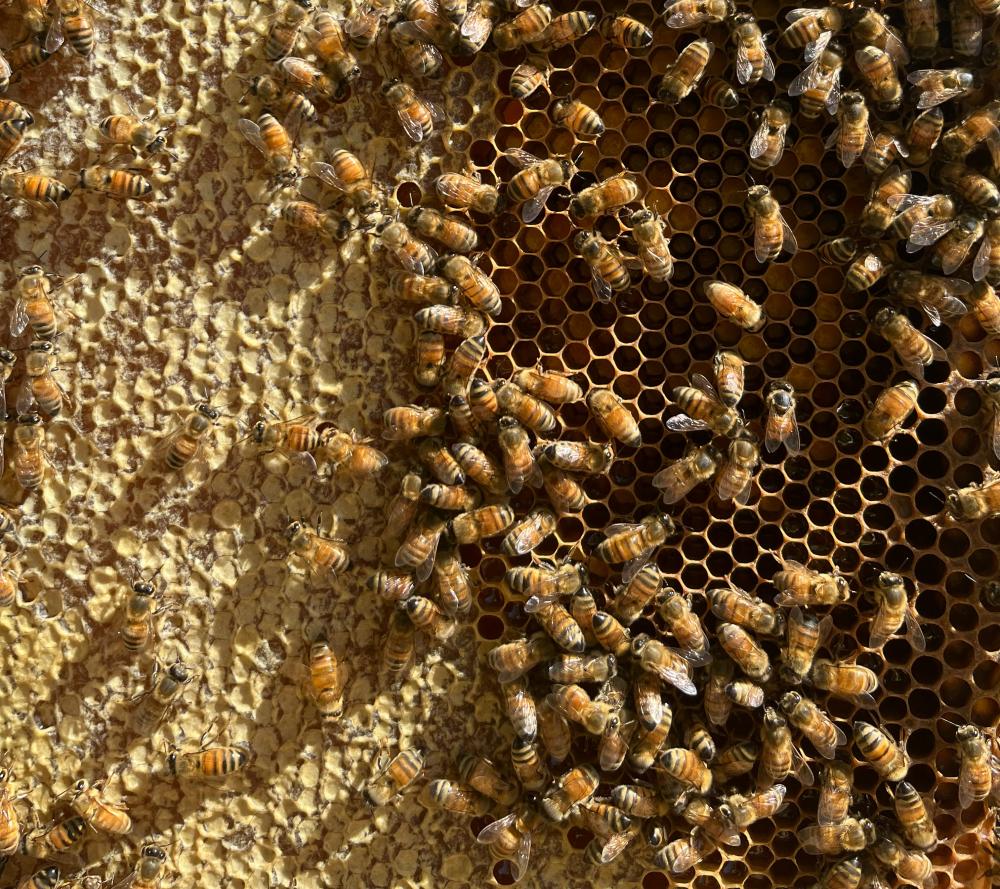 On a beehive, the golden material is pollen and honey. The dark brown material comes from babies that will hatch soon, and white material is larvae.
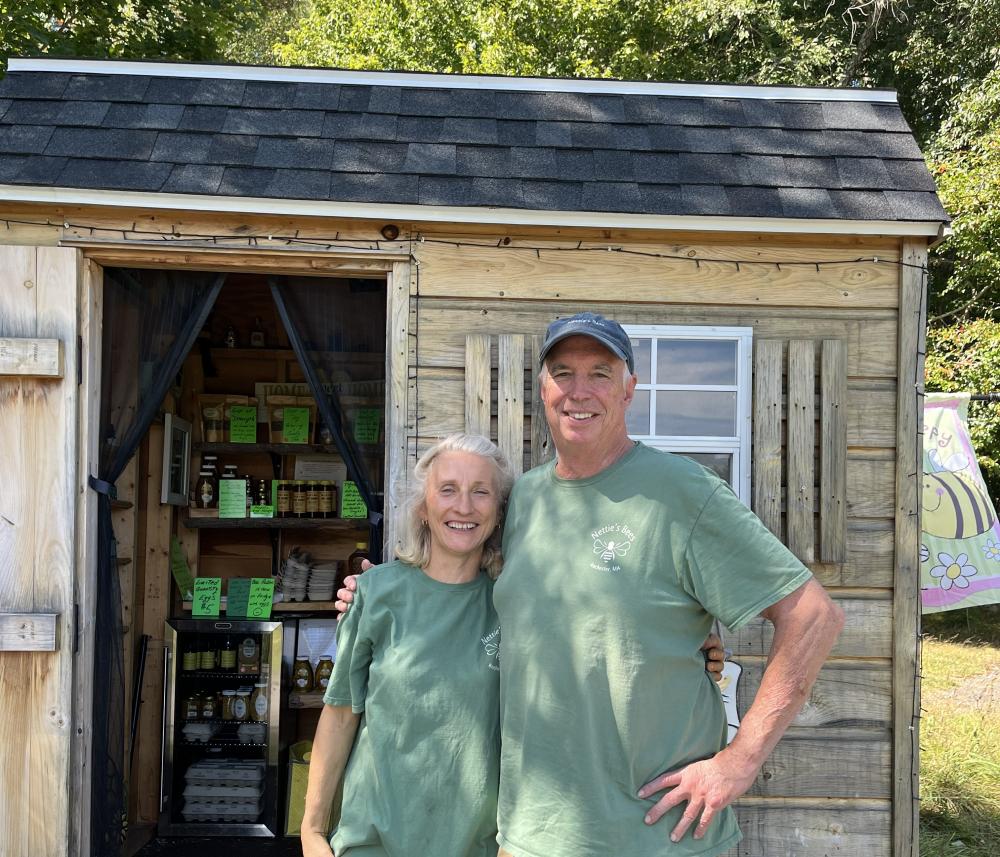 Nettie and Tom in front of the Honey House, which houses their bee products.
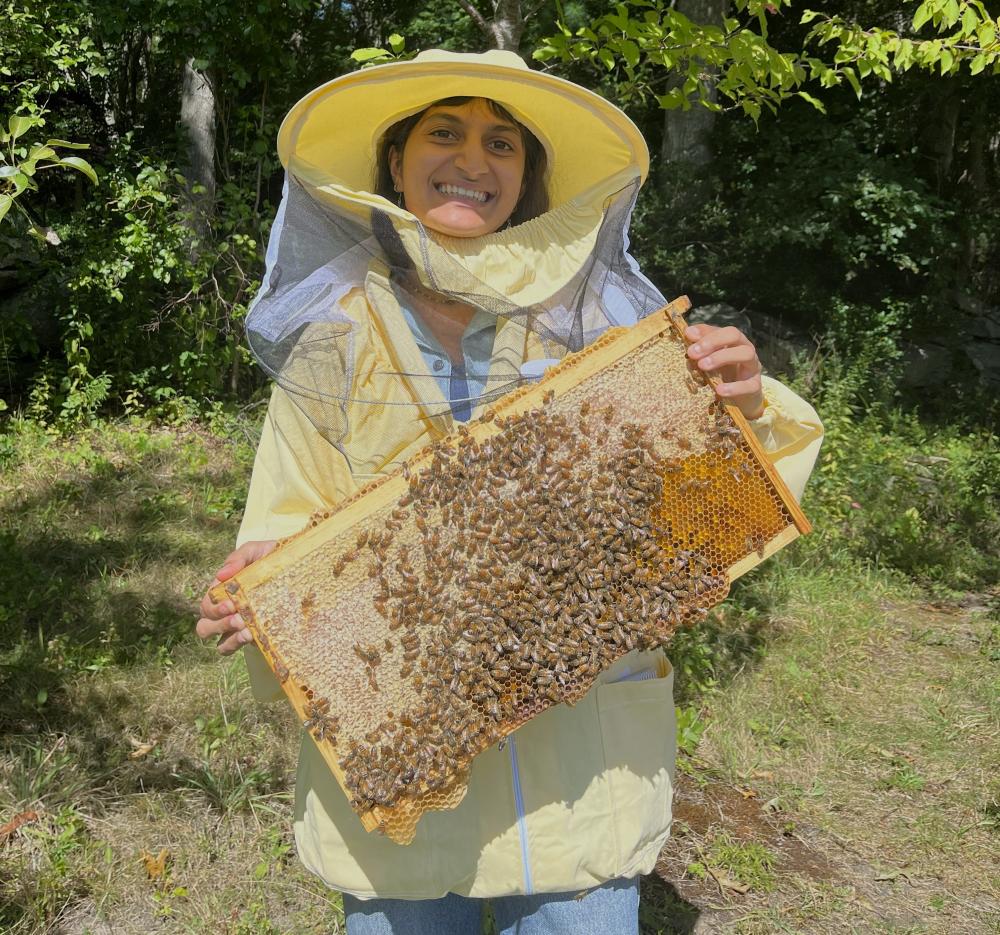 Reporter Tanvi Kulkarni wears a bee suit while handling a hive.
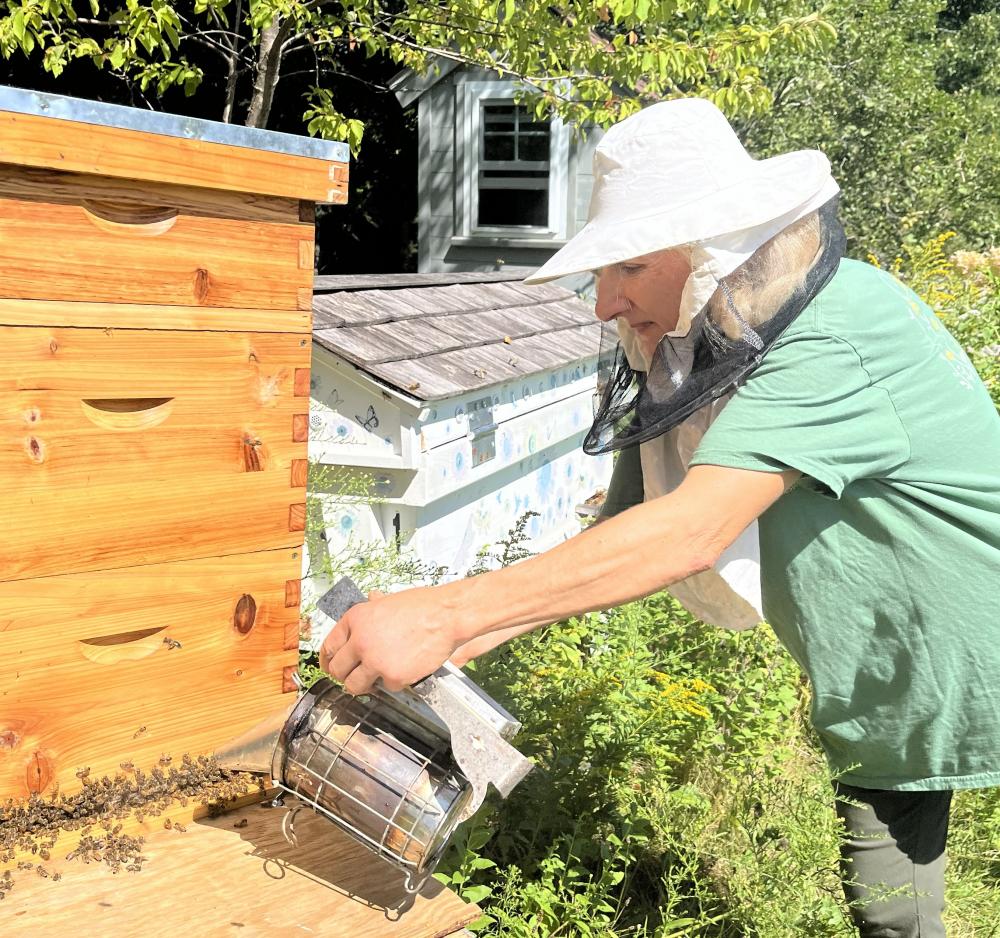 Nettie greets the bees with smoke from a bee smoker. “It keeps them calm. It’s kind of saying hello to them,” she said.
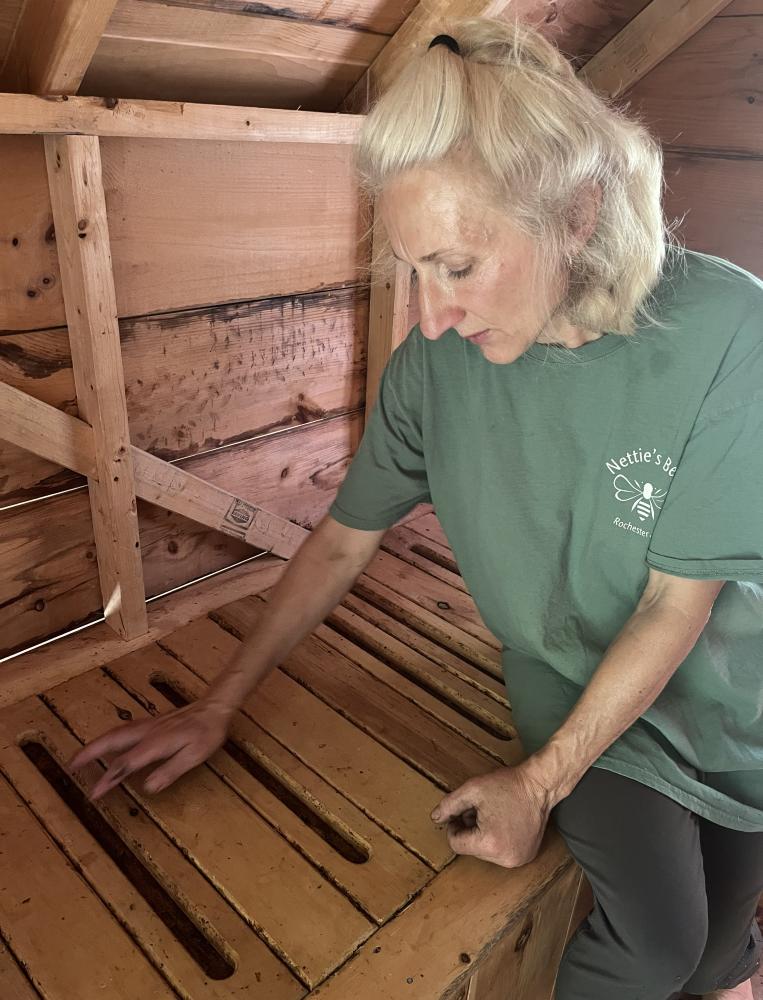 The cabin has a platform that people can visit and nap in, listening to the vibrations of the bees underneath.
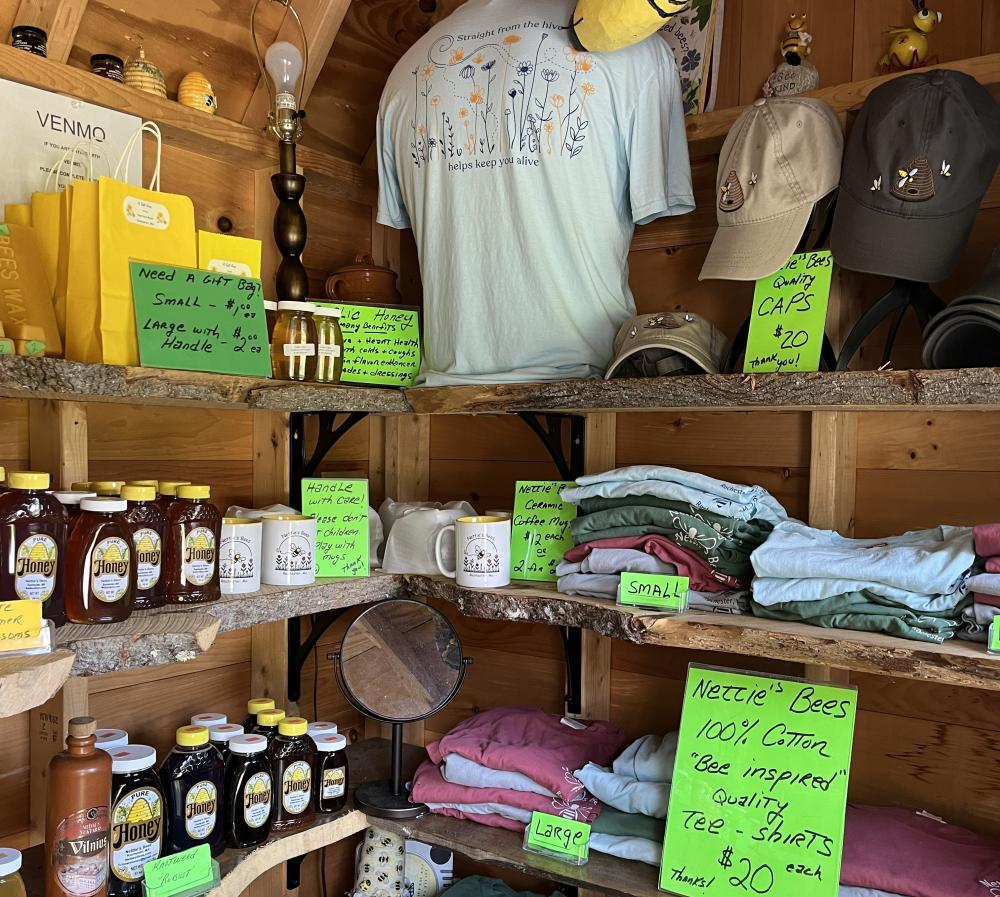 Products in the shop at 13 Shadow Farm Lane.
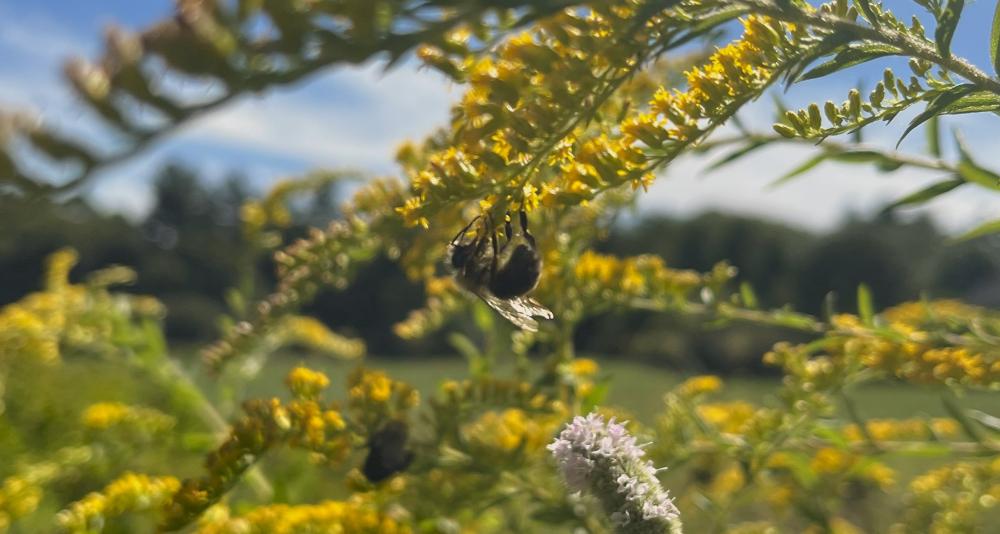 She has many different types of plants in her garden, and each plant has its own time to produce nectar. For example, dandelions produce nectar in the early morning.
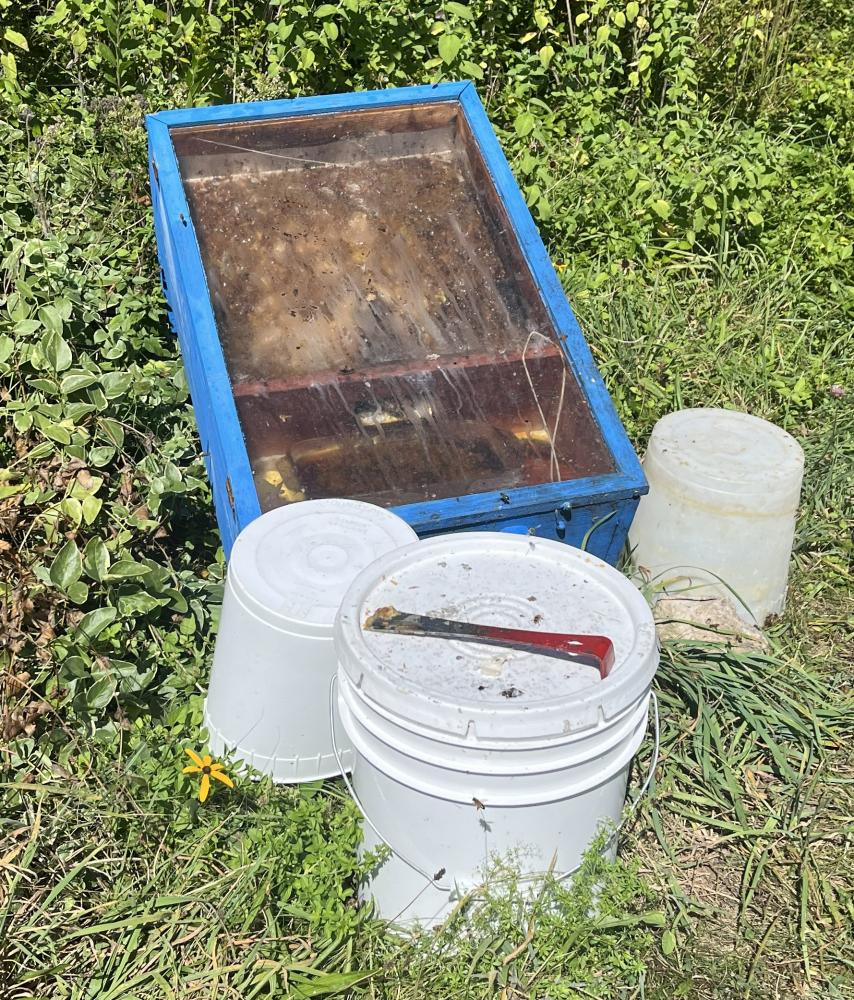 A solar wax melter helps Nettie melt and reuse beeswax. She said she doesn't let any go to waste.
Nettie often speaks or hums to the bees, "whatever comes to my head," she said.
On a beehive, the golden material is pollen and honey. The dark brown material comes from babies that will hatch soon, and white material is larvae.
Nettie and Tom in front of the Honey House, which houses their bee products.
Reporter Tanvi Kulkarni wears a bee suit while handling a hive.
Nettie greets the bees with smoke from a bee smoker. “It keeps them calm. It’s kind of saying hello to them,” she said.
The cabin has a platform that people can visit and nap in, listening to the vibrations of the bees underneath.
Products in the shop at 13 Shadow Farm Lane.
She has many different types of plants in her garden, and each plant has its own time to produce nectar. For example, dandelions produce nectar in the early morning.
A solar wax melter helps Nettie melt and reuse beeswax. She said she doesn't let any go to waste.
ROCHESTER — A gentle buzzing has followed Nerija most of her life.
She helped her father with his beekeeping from as early as she can remember, a rich tradition in their homeland of Lithuania. Now more than 4,000 miles away in Rochester, Nerija “Nettie” Hopkins shares her craft with the town through her own apiary, 70 hives and hand-harvested products.
Over the years, Nettie has worked in pharmacy, owned a restaurant on Nantucket Island and raised two children, but she always came back to beekeeping. She said it’s her “nature.”
“In our country, beekeeping is like a cult, like a religion. Everybody has bees,” Nettie said. “If you don’t have it, a neighbor does or a grandfather does.”
After moving to Rochester about 25 years ago, she had more time for beekeeping. Nettie started out with 10 hives. Now, she has over 70 hives and a small wooden shop where she sells the bees’ byproducts, including honeycombs, bee pollen and propolis, a material bees produce to seal cracks in the hive.
There are about 200 types of pollinators in the state, and about 20 of them visit Nettie’s apiary.
She has a small cabin on the property that community members are welcome to visit or nap in whenever they wish. Visitors who put their ear to the wooden platform inside can hear the bees in the hives underneath vibrating and creating a soft hum.
“What they say is the bees talk to each other through vibration. (Listening to it) rejuvenates you. They put me right out. It’s kind of cool to experience,” Nettie said. She has the cabin so “people understand how beautiful bees are. They’re not monsters, and they’re not that scary.”
Most of her hives sit on five local cranberry bogs. Without Nettie’s Bees, local farmers would need to rent bees for pollination. Nettie said she loves “working with those farmers because they watch for my bees,” and her bees only pollinate the amount of farmland they can handle.
“I want to take good care of bees. As everything else, it’s alive. My biggest purpose is to keep them healthy and alive,” she said.
She said her relationship with her bees is similar to other people’s relationship with their pets.
“When Nettie drives her truck down the driveway, the bees come, just like a dog would come running up to the door. They know the truck, and they know her,” said Tom Hopkins, Nettie’s husband.
Every hive has a personality, she said, and studies show bees can recognize a beekeeper’s face. In the past, Nettie has gone to help beekeepers who had gotten bees from her. They often ask her why the bees are so calm around her.
“I think people have connections with nature — some people horses, some people dogs. I do believe my language is bees,” she said. “It’s kind of an emotional connection to them. I would have a hard time picturing life without bees. I do miss them in the winter when they hibernate.”
Bees are like penguins, Nettie said. When they hibernate, they huddle for warmth with the queen in the center.
“It doesn’t matter how cold it is. They will keep precise temperature through flapping little wings, moving and eating honey,” she said. “They always rotate. When they get cold outside, they get in to warm up, and they keep rotating.”
Six years ago, Tom built a larger wooden shed near their house and apiary at 13 Shadow Farm Lane for people to stop by and shop on a self-serve honor system. The couple also promotes the items at area stores and farmers markets.
“The most rewarding thing is the people you meet,” Nettie said about her beekeeping. “You meet the most wonderful people. They’re looking for healthier products. Some people use honey for allergies, and they swear by that.”
Tom said many customers specifically come to shop for propolis, which is anti-viral and anti-bacterial. Customers told him it helped with sickness and preventing sneezing during allergy season.
“When you sell these products to people and they come back with feedback, 99% of it is positive feedback, and it does make (us) feel good,” Tom said. “(We) changed their life. It’s just amazing how many people and customers we reach. It’s very rewarding.”